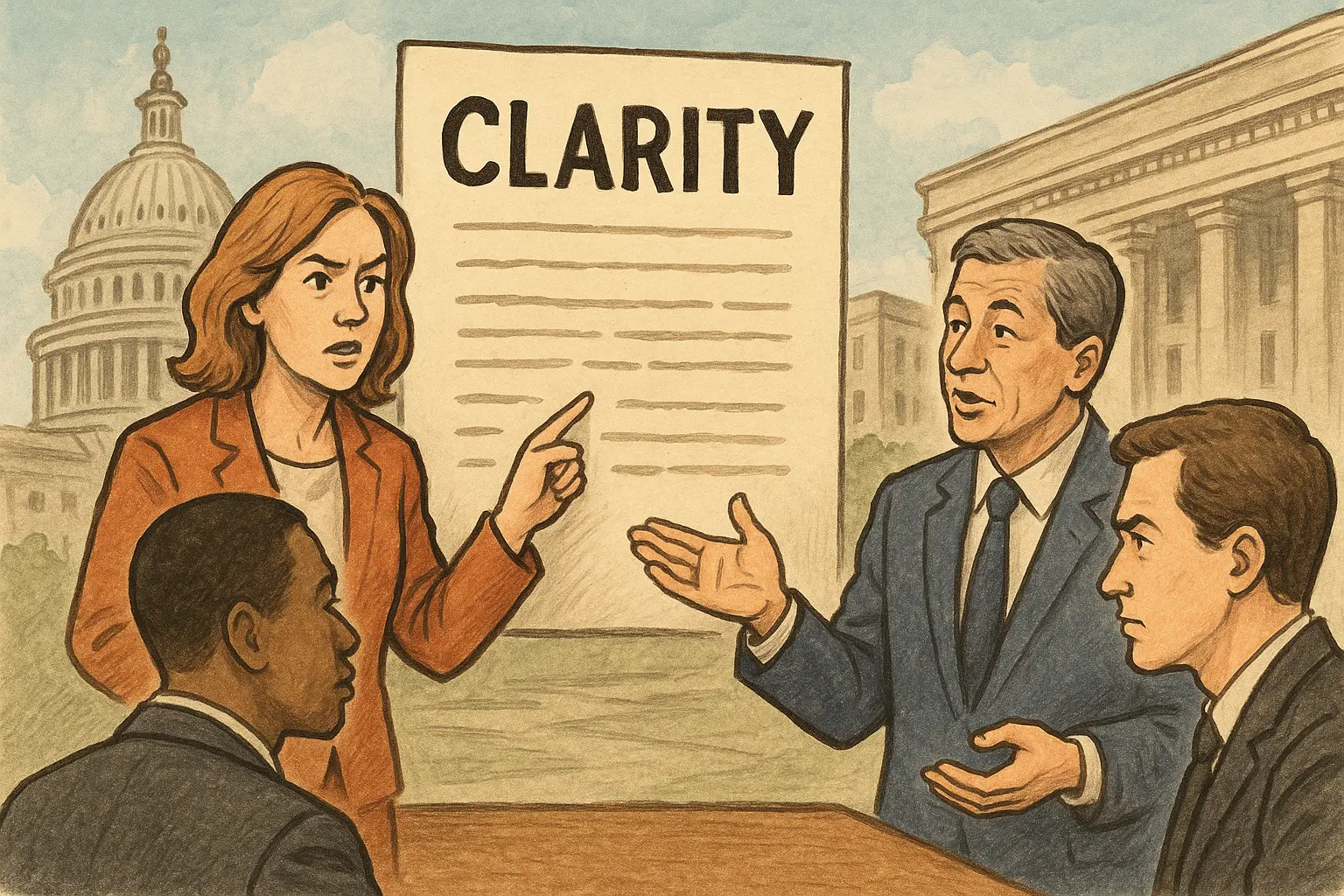
JPMorgan Chase published a report on Wednesday saying that negotiations on the U.S. “CLARITY Act” are nearing the end, and that the number of disputed items—originally as many as a dozen—has been reduced to “2 to 3”; the report also noted that the issue of “stablecoin yield” is moving in a more optimistic direction. The “CLARITY Act” is intended to establish a regulatory framework for the cryptocurrency industry, including delineations of jurisdiction between the SEC and CFTC, stablecoin rules, and more.
Key Findings from the JPMorgan Chase Report
According to JPMorgan Chase’s report released on Wednesday, discussions between lawmakers and regulators show that disputed items have been reduced from the original dozen-plus to “2 to 3.” A statement from a Senate staffer cited in the report said that the legislative draft “is nearing completion,” and that the remaining disputes mainly focus on DeFi regulation and token classification. JPMorgan Chase said in its report that the latest version of the draft may gain support from both the cryptocurrency industry and traditional financial institutions.
The Three Core Regulatory Issues of the CLARITY Act
Based on publicly available information, the core regulatory direction of the “CLARITY Act” is:
Jurisdictional split: clearly defining the boundary of responsibilities between the SEC and the CFTC in regulating crypto assets
Stablecoin rules: covering compliance requirements for stablecoin issuers, including whether it’s allowed to offer yield incentives to users
DeFi platform rules: setting regulatory standards for decentralized finance platforms
Background on the Stablecoin Yield Dispute and Legislative Timeline Risks
According to the JPMorgan Chase report, the stablecoin yield issue previously faced opposition from the traditional banking sector. Banks believed that allowing stablecoin issuers to offer yield incentives to users, without equivalent regulatory requirements, amounts to a disguised deposit-taking business. JPMorgan Chase’s latest report said that the issue is currently moving in a more optimistic direction.
Regarding legislative timeline risks, JPMorgan Chase said in its report that the final text of the “CLARITY Act” has not been released, and Congress has not scheduled a specific voting timeline. The report also mentioned that there is uncertainty surrounding the 2026 midterm elections, and based on market expectations, Democrats could potentially regain control of the House of Representatives, which may affect the legislative priority order for crypto-related legislation at that time.
Frequently Asked Questions
What are the main findings of the JPMorgan Chase report?
According to the report JPMorgan Chase published on Wednesday, negotiations on the “CLARITY Act” are nearing the end, with disputed items reduced from more than a dozen to “2 to 3.” A Senate staffer statement cited in the report said the draft is “nearing completion,” and that the remaining disputes focus on DeFi regulation and token classification.
What core regulatory issues does the “CLARITY Act” cover?
Based on publicly available information, the core regulatory direction of the “CLARITY Act” includes: the jurisdictional split between the SEC and CFTC for crypto asset oversight; compliance rules for stablecoin issuers (including the yield issue); and regulatory standards for DeFi platforms.
What is the main focus of the stablecoin yield dispute?
According to the JPMorgan Chase report, the traditional banking sector believes that allowing stablecoin issuers to offer yield incentives to users, without equivalent regulatory requirements, constitutes disguised deposit-taking; JPMorgan Chase’s latest report said that the issue is currently moving in a more optimistic direction.
Disclaimer: The information on this page may come from third parties and does not represent the views or opinions of Gate. The content displayed on this page is for reference only and does not constitute any financial, investment, or legal advice. Gate does not guarantee the accuracy or completeness of the information and shall not be liable for any losses arising from the use of this information. Virtual asset investments carry high risks and are subject to significant price volatility. You may lose all of your invested principal. Please fully understand the relevant risks and make prudent decisions based on your own financial situation and risk tolerance. For details, please refer to
Disclaimer.
Related Articles
Bank of Korea Prioritizes CBDCs Under New Governor Shin, Maintains 2.5% Rate Amid Regional Uncertainty
Gate News message, April 22 — South Korea's central bank has entered a new monetary phase with newly appointed governor Shin Hyun-song placing central bank digital currencies (CBDCs) at the forefront of the country's financial system. In his inaugural address, Shin positioned CBDCs and bank-issued d
GateNews1h ago
PACE Act Targets Faster Payments With Fed Access for Fintechs
PACE Act introduces optional federal licensing for fintechs, requiring compliance, reserves, and oversight by the OCC.
Direct access to Fed systems like FedNow and Fedwire aims to cut delays, lower costs, and reduce reliance on banks.
Industry groups support the bill, citing improved comp
CryptoFrontNews2h ago
CLARITY Act Faces May Delay Amid Bank Pressure Push
Senate timing pressures and hearings narrow the window, risking delay of the CLARITY Act markup decision into May.
Banking groups intensify lobbying against stablecoin yield provisions, expanding outreach to multiple committee members.
Ongoing disputes over yields, ethics, and DeFi
CryptoFrontNews2h ago
Russia's State Duma Passes Cryptocurrency Regulation Bill on First Reading, Allows Cross-Border Crypto Settlement to Bypass Sanctions
Gate News message, April 22 — Russia's State Duma passed a cryptocurrency regulation bill on first reading, classifying cryptocurrencies as "property" and designating the Central Bank of Russia to oversee market participants' licensing and supervision. The bill introduces a tiered access mechanism f
GateNews2h ago
Fed Chair Nominee Kevin Warsh Backs Crypto Integration, Opposes CBDC
Abstract: Trump's Fed chair nominee Kevin Warsh argues digital assets are already part of U.S. finance, rejects a central bank digital currency, and favors market-led crypto innovation. He disclosed more than $100 million in crypto holdings, inviting questions about independence.
Summary: Warsh, Trump's Fed nominee, says digital assets are integral to U.S. finance, rejects a CBDC, and favors market-driven crypto innovation; he disclosed more than $100 million in crypto holdings, raising independence concerns.
GateNews4h ago
SEC Chair Atkins: Tokenized securities regulation is being “reset,” signing an MOU with the CFTC
U.S. Securities and Exchange Commission (SEC) Chair Paul Atkins, in a keynote address at the Washington Economic Club on April 21 marking his one-year anniversary as chair, announced a “reset” plan for digital asset regulation surrounding its “A-C-T” strategy (Advancing, Clarifying, Transforming). The core elements include an “Innovation Exemption” mechanism, a five-category token classification framework, and a memorandum of understanding signed with the U.S. Commodity Futures Trading Commission (CFTC).
MarketWhisper5h ago


