
ShiFangXiCai7268

vip
Age 2.5 Yıl
Peak Tier 1
No content yet
#加密市场回升
Pause period of 20 years vs short-term compromise? Do you think Iran will make a key concession?
My personal judgment is that the likelihood of Iran making a critical concession in the short term is low, but there is limited tactical room for compromise.
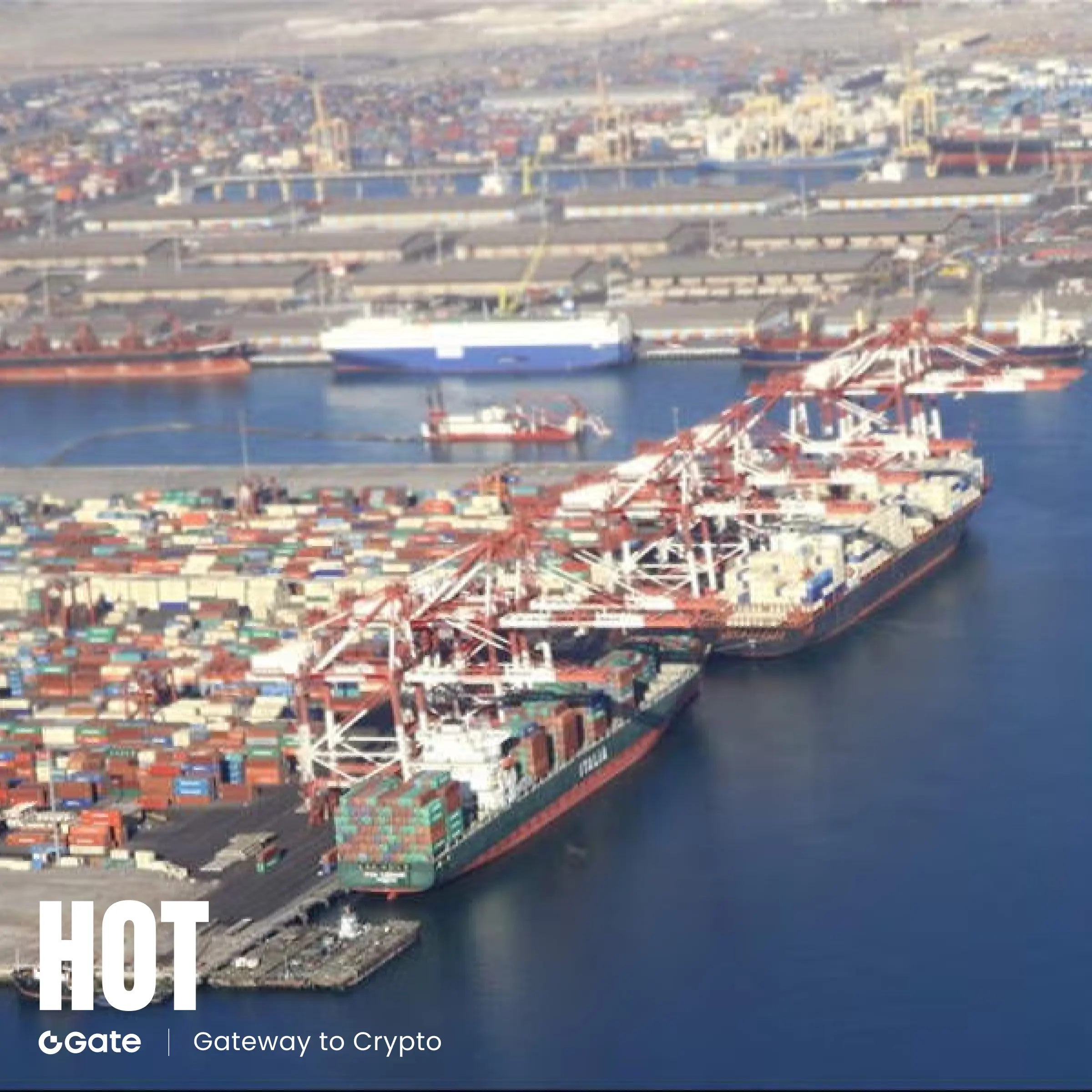
On one hand, the maritime blockade imposed by the U.S. can be considered extreme pressure—intercepting all ships entering and leaving Iranian ports, directly cutting off oil revenue lifelines. On the day negotiations broke down, WTI crude oil surged to $105.53 per barrel. But sanctions are a double-edged sword; blocking the Strait of
BTC4,55%
ETH6,2%
DEFI-5,52%
AAVE5,69%
View Original
post-image
post-image
FatYa888
#加密市场回升
Pause period of 20 years vs. short-term compromise? Do you think Iran will make key concessions?
My personal view is that Iran is less likely to make key concessions in the short term, but there is some limited tactical space for compromise.
On one hand, the maritime blockade launched by the U.S. can be described as extreme pressure—intercepting all ships entering or leaving Iranian ports, directly cutting off the lifeline of oil revenues. On the day negotiations broke down, WTI crude oil surged to $105.53 per barrel. But sanctions are a double-edged sword: blocking the Strait of Hormuz would disrupt nearly 20% of global oil transportation, and the resulting spike in oil prices would ultimately boomerang back on the U.S. economy itself. British Prime Minister Starmer has clearly stated that he does not support it. France even set up its own effort to organize a “Multinational Peace Operation.” Deep disagreements among allies greatly weaken the blockade’s actual deterrent effect.
On the other hand, Iran’s “resistance economics” has been tested many times already, and it is unlikely that it would give in in the short term. However, Trump has plans to visit China in mid-May. The U.S. does not want China to be pulled into the conflict, and it is also unlikely to intercept Chinese oil tankers—this objectively leaves a gap for Iran’s crude oil to keep being exported via China. The subsequent negotiation window remains open, and the next round of direct talks may be held on April 16 in Islamabad. The Iranian side may show cooperation on small-scope issues, but on core interests such as the nuclear issue, substantial concessions are basically out of the question.
How much do you see as the “ceiling” of this rebound?
This rebound right now is mainly a phase market driven by emotion-driven repair, and the “ceiling” is limited.
From the crypto market itself, BTC has broken above $74,000, with a 24-hour gain of 4.51%; ETH is up 7.56%; and the DeFi sector as a whole is up 5%, with Aave surging 10.75% and Lido DAO up nearly 10%. Market confidence has been boosted by rising expectations that the U.S. and Iran will reach an agreement, leading to quick capital inflows into high-beta assets. But if you break it down carefully, you can see that the actual implementation of an agreement is still far off. The ceasefire period is only two weeks—a tactical window rather than lasting peace—and the gap between both sides’ bottom lines remains huge.
From the liquidity environment, elevated oil prices are pushing up inflation expectations, and the room for the Federal Reserve to cut rates is being continuously squeezed. CME FedWatch shows that the probability the market assigns to rate cuts before the end of this year is only about 21%. With expectations of tighter liquidity, crypto assets as high-beta instruments face severe challenges to the sustainability of the rebound.
In the short term, BTC faces a psychological resistance zone at $75,000–$76,000. If substantial progress is reported in the next round of talks on April 16, the market may surge again; conversely, if the blockade persists and oil prices climb further to above $110, risk assets will face renewed pressure. Overall, the upper limit of this rebound is roughly around $78,000. The more likely scenario is range-bound volatility between $75,000 and $78,000, followed by waiting for a new direction to be chosen.
Given changes in the situation, how should the allocation ratios for crude oil, crypto assets, and precious metals be dynamically adjusted?
Against the backdrop of the current highly uncertain U.S.-Iran situation, it is recommended to adopt a “core + satellite” allocation approach: divide assets into three tiers and dynamically adjust the weights.
First tier: Crude oil— the core allocation direction for the current stage.
As long as the Strait of Hormuz blockade continues, the fundamental support for oil prices will be extremely solid. WTI crude oil has already returned above $97, and in some periods it has broken above $100. If the strait keeps closed, JPMorgan expects that global inventories will be completely exhausted around April 20; at that point, oil prices will very likely make another push higher. It is recommended that crude-oil-related assets account for 30%–35% of total positions, prioritizing oil ETFs with strong liquidity or oil and gas sector targets.
Second tier: Gold— a ballast for long-term safe-haven needs, but with insufficient short-term upside.
Gold has both safe-haven and inflation-hedging attributes, but the current market focus is that the rise in oil prices is suppressing the Federal Reserve’s monetary policy. This weakens gold’s attractiveness in the short term. From a long-term perspective, persistent purchases by global central banks and weakening confidence in fiat currency provide structural support. It is recommended that gold allocation be 15%–20%, mainly in physical gold or gold ETFs, as “insurance” against extreme scenarios.
Third tier: Crypto assets— high-beta, flexible instruments, mainly for swing trading.
Crypto assets are currently highly correlated with technology stocks such as the Nasdaq, making them extremely sensitive to liquidity and market sentiment. If oil prices keep climbing to above $110, liquidity will tighten further, and the crypto market will face greater downside pressure. It is recommended that crypto asset allocation not exceed 15%–20%, and be mainly concentrated in mainstream assets such as BTC and ETH. Strictly control leverage and set up stop-loss protection. In the current choppy market, swing-trading strategies such as trimming into rebounds and buying on pullbacks are more effective.
Principles for dynamic adjustment: Watch three key variables—the April 16 negotiation outcome in Islamabad (which directly determines the direction of sentiment), whether oil prices break above $110 (which affects liquidity expectations), and the communication style of statements by Federal Reserve officials. If oil prices break above $110 and stay there, promptly reduce allocations to crypto and equity assets and increase gold. If negotiations unexpectedly deliver a breakthrough and oil prices fall to below $90, you can moderately increase the proportion of risk assets and seize the rebound window.

repost-content-media
  • Reward
  • 18
  • Repost
  • Share
ShizukaKazu:
The Bull Returns Quickly 🐂
View More
#Gate广场四月发帖挑战
Is it another fleeting moment? - Analysis of the BLESS Top Gainers
Last night, RAVE experienced high-level fluctuations, with some capital flowing out. BLESS continued to perform relay-style, surging this morning to a high of $0.37482, a 300% increase within the range, then sharply falling back. It’s worth noting that, from the daily chart, previous surges in BLESS also showed sudden spikes followed by quick drops—like “fireworks” that quickly fade. Will this time be a repeat? How are BLESS’s fundamentals? Is it a good time to buy the dip? Let’s take a look!
BLESS Project
BLESS39,89%
RAVE47,21%
View Original
post-image
LittleGodOfWealthPlutus
#Gate广场四月发帖挑战
Is it another fleeting moment? - Analysis of the BLESS Price Surge
Last night, RAVE experienced high-level fluctuations, with funds flowing out, and BLESS followed suit, surging this morning to a high of $0.37482, a 300% increase within the range, then sharply falling back. Notably, from the daily chart, previous price rallies of BLESS also showed sudden spikes followed by quick drops, resembling a “flash in the pan” pattern. Will this time be the same? How are BLESS’s fundamentals? Is it a good time to buy the dip? Let’s take a look!
BLESS Project Overview
BLESS is the core utility token driving the Bless Network ecosystem, which itself is a decentralized edge computing platform aimed at disrupting traditional resource utilization models. Established in 2022 and headquartered in San Francisco, USA, it was originally called Blockless. Its vision is to build a “shared global computer,” aggregating idle computing power from laptops, desktops, smartphones, and other everyday devices worldwide to provide on-demand resources for AI, machine learning, data processing, and other compute-intensive tasks.
Core Advantages
1. Decentralized Edge Computing: Breaking the Cloud Monopoly
Bless Network leverages the idle resources of millions of users worldwide (such as PCs, MacBooks, smartphones) to push computing tasks closer to users at the “edge nodes,” avoiding the high latency and costs associated with traditional centralized data centers. This “user-as-node” model not only significantly improves resource utilization but also achieves a 90% cost reduction, providing cost-effective computing power for AI inference, real-time applications, and more.
2. WASM Secure Sandbox: Ensuring User Device Security
All computing tasks run within isolated environments based on WebAssembly (WASM), ensuring that code cannot access user privacy data or core system resources. This mechanism guarantees network computing capabilities while alleviating privacy and security concerns for ordinary users participating as nodes, greatly lowering the participation barrier.
3. Intelligent Task Scheduling and Anti-Attack Design
The network incorporates dynamic resource matching algorithms that automatically allocate tasks to the optimal nodes based on requirements such as geographic location, computing power type, and latency. Additionally, it employs anti-Sybil attack mechanisms (like Gregory-Latin square algorithms) to randomize task distribution, preventing malicious nodes from manipulating the network, thus ensuring stability and trustworthiness.
Token Economics Model
The total supply of BLESS tokens is 10 billion, with 1.84B in circulation and a market cap of $33 million. BLESS uses a dual-token model, where TIME is a points token during the testnet phase, earned by running nodes and staying online; after mainnet launch, it can be exchanged for BLESS tokens. BLESS is the core protocol and governance token of the network.
Token distribution considers various aspects of ecosystem development:
Community Incentives (35%): Rewards for nodes contributing idle computing resources, encouraging ecosystem growth and active participation;
Ecosystem/Foundation (about 20%): Supporting ecosystem project development, partnerships, marketing, etc.;
Investors (about 17%): Allocated to early-stage institutional and individual investors to fund project launch and growth;
Team (15%): Incentivizing core team members to ensure long-term stability and development;
Airdrops (10%): Distributed via airdrop campaigns to community users to enhance token liquidity and community influence;
Advisors (3%): Allocated to project advisors for their professional guidance and support.
Additionally, Bless Network has designed a unique value capture mechanism: when developers deploy applications and services on the network, 90% of the fees paid will be used to buy back BLESS tokens from the secondary market and permanently burn them, with the remaining 10% going into the treasury for ecosystem development. This deflationary mechanism will reduce circulating supply as network usage increases, potentially providing long-term support for the token’s price.
Application Scenarios
- Network transactions and fee payments
- Staking and network security
- On-chain governance and community participation
- Ecosystem incentives and node contribution rewards
- Cross-chain compatibility and ecosystem expansion
Secondary Market Performance and Future Outlook
Today, after a rapid surge, BLESS experienced a straight decline. From the 4-hour chart, the latest candle has completely engulfed the previous 4-hour gains, forming a hammer-like bearish engulfing pattern, indicating potential further downside in the short term. On the daily chart, support is around $0.014. Those looking to buy the dip can consider positioning with stop-losses in place! That’s all for now. Wishing everyone daily prosperity!

repost-content-media
  • Reward
  • 20
  • Repost
  • Share
ShizukaKazu:
The bull quickly returns 🐂
View More
#Gate广场四月发帖挑战 Cryptocurrencies are generally halved; what is their current position?
In April, the cryptocurrency market is in a state that makes people both anxious and conflicted. Bitcoin has fallen from its October 2025 all-time high of $126,080 down to around $70,000, a retracement of nearly 47%. Altcoins are even more brutal—Ethereum dropped to about $2,200, Ripple to $1.33, Solana to $82, and the GMCI30 index tracking the top 30 cryptocurrencies worldwide remains at a low level. Faced with this "halving" market, the most concerned question for investors is: Have we reached the bottom? Is
BTC4,55%
ETH6,2%
XRP2,99%
View Original
post-image
post-image
post-image
ShizukaKazu
#Gate广场四月发帖挑战 Cryptocurrencies are generally halved; what is their current position now?
In April, the cryptocurrency market is at a point that makes people both anxious and conflicted. Bitcoin has fallen from its October 2025 all-time high of $126,080 down to around $70,000, a retracement of nearly 47%. Altcoins are even more brutal—Ethereum dropped to about $2,200, Ripple to $1.33, Solana to $82, and the GMCI30 index tracking the top 30 cryptocurrencies worldwide remains at a low level. Faced with this “halving” market, the most pressing question for investors is: Have we reached the bottom? Is now the time to buy-in, or should we continue to wait and see?
01 Divergence of Bulls and Bears: Where exactly is the market?
The current conflicting signals in the market can be summarized in one sentence—institutions are buying, retail investors are panicking, technicals are signaling a reversal, and macro factors are exerting pressure.
On the bullish side, big players like Goldman Sachs are standing behind. Goldman Sachs analyst James Yaro explicitly stated in a research report in early April that the crypto market “may have already touched the cycle bottom.” His core argument is that after four consecutive months of net outflows, $1.32 billion of institutional funds flowed back into Bitcoin spot ETFs in March, indicating a shift from speculative selling to long-term capital accumulation. Yaro defines the $68,000 to $71,000 range as Bitcoin’s support zone and believes leverage liquidations have largely been completed.
Meanwhile, on-chain data is also signaling a bottom. The MVRV Z-Score is compressing, a metric historically highly correlated with major cycle lows; the 720-day Bitcoin indicator (TBBI) has fallen below 20, also indicating the end of a long-term downtrend. The number of Bitcoins held by accumulation addresses has surged from 2 million at the start of 2024 to 4.37 million on April 7, showing long-term holders are continuing to buy amid market panic.
Bitcoin reserves on exchanges have fallen to a two-year low, with institutions continuously “buying the dip” in panic.
But the bearish voices cannot be ignored either. Veteran trader Peter Brandt pointed out that Bitcoin’s current price structure is incomplete, and the market still needs to go through a downward shakeout. He expects the price to fall below $66k to clear out bullish liquidity before a meaningful rebound can occur.
CryptoQuant analyst oro_crypto also warned that the recent rebound from $66,000 to $72k was entirely driven by futures leverage and lacked spot buying support—an “unfunded water” situation. Some analysts, based on historical cycle patterns, believe it’s still too early. Crypto analyst @CryptoTice_ pointed out that, based on the patterns of the past four halving cycles, the true bottom usually forms between 800 and 950 days after the halving, which points to Q4 2026 rather than the current stage. He emphasized that a real bottom would require a complete collapse of market confidence and participants capitulating, whereas currently, some are still actively buying and expecting a short-term rebound.
02 Macro Environment: Hawkish Fed and Geopolitical Pressures
The macro environment in 2026 is not friendly to cryptocurrencies. The Federal Reserve’s benchmark interest rate remains between 3.50% and 3.75%, with inflation expectations still above the 2% target. March’s CPI rose 3.3% year-over-year, and although core CPI was below the expected 2.7%, market expectations for rate cuts continue to be delayed—Polymarket’s probability of no rate cut in 2026 has surged from about 2.9% in mid-January to 35.9%. More troubling, CME interest rate swaps show an 87.6% chance of holding rates steady in April, but the rate hike expectation has doubled to 12.4% since the beginning of the month.
A new Fed paper even found that since 2021, Bitcoin and Ethereum increasingly track macro signals like U.S. inflation and employment data, showing high correlation with risk assets. After ETF launches, the correlation between Bitcoin and Fed policy has reversed, with institutional investors now pricing in rate changes 6 to 12 months in advance.
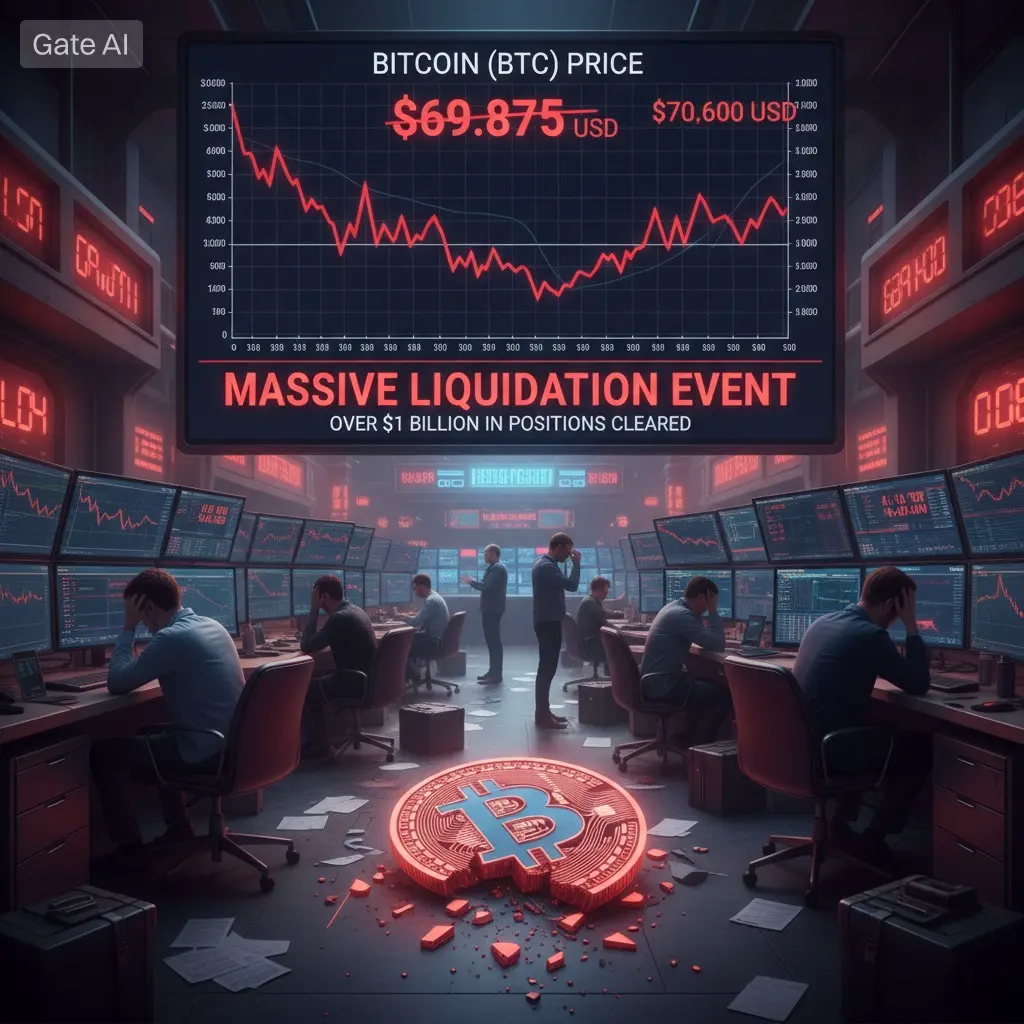
On the geopolitical front, the Iran-U.S. talks in Islamabad broke down after 21 hours, the U.S. announced a blockade of the Strait of Hormuz, and Brent crude oil surged to $98 per barrel. Following the news, Bitcoin dropped about 3% within 24 hours to around $70,600. For cryptocurrencies, geopolitical conflicts are now an unavoidable influence—they are no longer “digital gold” safe havens but are highly correlated with risk sentiment. As BTC Markets analysts noted, current geopolitical news is dominating short-term crypto market movements.
03 Technical Analysis: Cup-and-Handle Formation, but Momentum in Doubt
From a technical perspective, Bitcoin’s daily chart is forming a classic cup-and-handle pattern. The neckline is between $73,151 and $73,240. If the price can close above this level, the measured move target is about 11%, potentially reaching around $81,720. However, there are concerns. The RSI (Relative Strength Index) shows a “hidden bearish divergence”—from March 4 to April 9, Bitcoin made lower highs while RSI formed higher highs, suggesting the downtrend may not be over yet, and the current rebound might still need further consolidation.
Key support is testing the 50-day exponential moving average at around $70,700. Resistance is at the $73,750 to $74,400 zone. If the price falls below the 50-day EMA, it could further retrace toward $60,000. The negative funding rate (-6%) and high short positions increase the risk of a short squeeze—once the price breaks resistance, a large number of short positions could be liquidated, pushing for a rapid rebound.
04 Market Liquidity: Stablecoin Inflows and ETF Funds Hit Three-Month Highs
The most recent and notable signals come from market liquidity. During the week of April 6–12, the market saw $2.56 billion in stablecoin inflows, with spot and perpetual contract trading volumes on centralized exchanges both increasing week-over-week. On-chain data shows funds are gradually flowing back from stablecoins into Bitcoin. Institutional inflows are also a positive sign. The U.S. spot Bitcoin ETF recorded a net inflow of $786 million last week, the strongest since February; on April 13, there was a single-day net inflow of $471 million—the largest in about three months. Strategy firms bought 13,927 Bitcoins during this period, worth about $1 billion. The rising share of institutional holdings and CME Bitcoin futures open interest surpassing $66k indicate a shift from retail-driven speculation to a more institutional, structural environment.
05 Institutional Views: Optimism from the Bulls, Caution from the Skeptics
Reviewing recent institutional and analyst opinions, the bullish camp includes: Goldman Sachs, which believes the market may have already hit the cycle bottom; Bernstein maintaining a $150k Bitcoin target by the end of 2026; and Tom Lee of Fundstrat, who estimates Bitcoin could reach $200k to $250k.
But cautious voices also warn investors: Bitf warns April will be a critical month for whether rate expectations can be maintained; several institutional analysts point out that resolving the U.S.-Iran conflict and whether Bitcoin can return to its historical highs are necessary conditions for the next bull run. ZFX Shanhai Securities offers a more moderate view, suggesting Bitcoin is currently in a low-volatility consolidation phase, with short-term sentiment neutral to slightly weak but with potential for a rebound. Multiple perspectives converge on one conclusion: the current position shows characteristics of a bottom zone, but the ultimate direction depends on whether macro variables can improve substantially. As André Dragosch, head of European research at Bitwise, put it, Bitcoin’s risk-reward ratio is “significantly tilted in favor,” but this depends on geopolitical and macroeconomic conditions aligning.
Conclusion: How to navigate the current bottom game? Returning to the initial question: after the widespread halving of cryptocurrencies, is this the bottom?
Objectively, signals supporting the formation of a bottom are increasing—ongoing institutional inflows, accelerated on-chain accumulation, stablecoin fund reflows, and gradually improving technical patterns. But uncertainties are equally prominent—unclear macro rate-cut paths, unresolved geopolitical conflicts, and insufficient short-term momentum for a rebound. For ordinary investors, the following variables are worth continuous monitoring:
Can ETF inflows sustain—this is the most direct indicator of institutional sentiment;
The evolution of U.S.-Iran tensions—geopolitical conflicts are the biggest short-term disruptors;
The Fed’s statements at the April FOMC meeting—interest rate decisions will directly impact risk asset valuations;
Whether Bitcoin can hold above $70,000—this is a key technical signal for a potential bullish reversal.
As many analysts have said, the April 2026 crypto market is in a “test of discipline” phase. The market’s bottom is never a single price point but a range; confirming the bottom is not based on any single indicator but on the resonance of multiple signals.
repost-content-media
  • Reward
  • 17
  • Repost
  • Share
XiaoXiCai:
Hold steady and secure, taking off immediately🛫
View More
#加密市场回升 A earth-shattering reversal! US-Iran ceasefire sparks Bitcoin to break $74k, with shorts wiped out $2.6 billion overnight
The smoke from the US military blockade of the Strait of Hormuz has yet to clear, yet Iran and the US unexpectedly sit down at the negotiation table. Iran releases a strong signal of peace, instantly igniting market risk appetite, and Bitcoin surges accordingly, breaking the $74k mark. However, amid this sudden celebration, shorts suffer a bloodbath, with liquidations totaling $531 million within 24 hours across the network, with shorts accounting for over 80%. Co
BTC4,55%
ETH6,2%
WBTC4,6%
View Original
post-image
post-image
Ryakpanda
#加密市场回升 Earth-shattering reversal! US-Iran ceasefire sparks Bitcoin to break through $74k, with shorts wiped out by $2.6 billion overnight
The smoke from the US military blockade of the Strait of Hormuz has yet to clear, yet surprisingly, the US and Iran have sat down at the negotiation table. Iran has issued a strong signal of peace, instantly igniting market risk appetite, causing Bitcoin to surge sharply, breaking through the $74k mark. However, in this sudden celebration, shorts suffered a bloodbath, with a total liquidation of $531 million across the network within 24 hours, with shorts accounting for over 80%. Contrasting sharply with the new high in price is the outflow of ETF funds, which reversed course and withdrew $291 million. The bulls and bears are entering a fierce contest, and the market stands at a crossroads.
1. Market overview: dual currencies soar, Bitcoin hits four-week high
On April 14, the cryptocurrency market experienced a long-awaited rally. Bitcoin (BTC) showed strong upward momentum, briefly rising to $74,900 in early trading, hitting the highest level since March 17. As of press time, Bitcoin’s price stabilized around $74,418, up 4.78% in 24 hours, with an 8.4% increase over the past 7 days. Intraday, the price steadily rose from the support level of $70,470, eventually breaking through previous resistance with increased volume, setting a new high at $74,800, establishing a fully bullish short-term structure.
Ethereum (ETH) performed even more aggressively, rising in tandem and testing the $2,393 high. As of press time, ETH is quoted around $2,350, up 6% in 24 hours, completely breaking previous consolidation patterns, with the prior range now serving as strong support.
From trading volume, market enthusiasm is high. Bitcoin spot trading volume is about $7.1 billion, with futures trading reaching $77.6 billion; ETH spot volume also increased, with futures following closely. The total crypto market cap rebounded to approximately $1.48 trillion, a 4% increase in 24 hours.
2. The cause of the surge: US-Iran peace signals ignite risk appetite
The core catalyst for this rally comes from a dramatic turn in Middle East geopolitical tensions. On April 13, U.S. President Trump claimed Iran had engaged with the U.S. government on potential peace negotiations, despite the U.S. having begun a maritime blockade of the Strait of Hormuz. This news completely reversed the previous pessimistic expectations of ongoing deterioration.
Damien Loh, Chief Investment Officer of Ericsenz Capital, analyzed: "Although the blockade has started, the market generally believes that Trump has actually extended the timetable for reaching an agreement, and he is repeatedly seeking new negotiations, which is a positive signal."
As a result, oil prices, which had surged on the blockade news, retreated sharply, with WTI crude futures falling by 3%, to $96.07 per barrel. Asian stock markets rose, risk assets rebounded across the board, and market optimism grew that an agreement would help ease oil prices and boost economic growth.
Against this backdrop, the crypto market completed a stunning reversal, with Bitcoin strongly breaking through previous consolidation ranges. Digital assets not only absorbed the spillover of risk appetite from U.S. stocks but also benefited from the retreat of geopolitical risk premiums. This rally is similar in logic to the one two weeks ago when ceasefire news was announced—once the US and Iran return to negotiations, the previously accumulated high geopolitical risk premiums will quickly dissipate, and cryptocurrencies, as high-beta risk assets, will rebound first.
3. Liquidation data: shorts suffer a bloodbath, $426 million liquidated overnight
This sudden surge caused many short traders betting on declines to pay a painful price. CoinGlass data shows that in the past 24 hours, the total liquidation across the network reached $531 million. In the battle between bulls and bears, shorts became the absolute "biggest casualties"—short liquidations totaled $426 million, while long liquidations were only $105 million. By coin, Bitcoin longs suffered heavy losses, with $11.53 million in long liquidations and $218 million in short liquidations; ETH was similarly brutal, with $21.76 million in long liquidations and $114 million in short liquidations. About 177,236 traders were liquidated in total, with the largest single liquidation order coming from Aster trading pair, valued at $12.4 million. This liquidation structure shows a clear "short-dominated" characteristic.
Notably, just before the surge, Bitcoin derivatives market funding rates briefly dropped to -0.253%, meaning short holders were paying longs, indicating a dominant bearish sentiment. When extremely negative funding rates coincide with declining exchange reserves, it often signals a short squeeze—this is the technical root of the bloodbath among shorts.
4. Internal market contradictions: dark currents behind new highs
Despite the strong price rally, internal market signals show signs of divergence that warrant caution.
🔴 Abnormal signal: ETF outflows of $291 million against the trend
Amid Bitcoin’s strong push above $74k and mainstream assets rallying, U.S. spot ETFs recorded a net outflow of $291 million on April 13, with price gains coinciding with capital withdrawal, creating a classic "strong price but weak funds" scenario.
Structurally, this net outflow was mainly driven by Fidelity’s FBTC: a single-day outflow of $229 million, nearly accounting for all the loss; Ark ARKB and Grayscale GBTC recorded outflows of about $62.89 million and $38.25 million respectively. This is not an isolated phenomenon for individual products but a coordinated capital exit across several leading institutions on the same day, which can be seen as a typical "profit-taking at high levels" signal: early institutions that entered via discount arbitrage or trend-following strategies are reducing positions after the price hits new highs. However, unlike the usual "ETF outflows pressure spot prices," this round of concentrated outflows did not immediately drag Bitcoin below high levels; it remains near high ground, leaving a clear question mark over whether funds will flow back or continue to retreat.
🟢 Positive signals: on-chain data shows multiple favorable signs
Meanwhile, on-chain data shows a very different picture. Exchange reserves continue to decline: from February 15 to April 10, total Bitcoin reserves on exchanges decreased from 2.8 million BTC to 74k BTC, a reduction of about 100k BTC (~$7.3 billion at current prices) in roughly two months. The decrease in tokens held on exchanges reduces immediate sell pressure.
Whales betting on longs: contrasting with the high-level profit-taking in ETFs, on-chain whales are actively accumulating. A whale address associated with a crypto financial service currently holds 120k ETH (~$283.5 million) and 700 BTC (~$52 million) in long positions, with unrealized gains exceeding $36 million. Four other addresses have jointly accumulated 112.86 WBTC, worth about $74k, reflecting strong institutional confidence in Bitcoin spot at current levels. This divergence—ETF outflows versus whale accumulation—reveals a core market contradiction: traditional financial institutions are taking profits at high levels, while "old money" on-chain is increasing positions. The battle between bulls and bears is intensifying, and who will ultimately prevail remains uncertain.
5. Market battle and outlook: three key catalysts to watch
Analysts believe that the current Bitcoin price is oscillating between $68,000 and $75,000, entering a critical trading window leading up to 2026, with three major catalysts expected to unfold in the next two weeks.
Catalyst 1: Iran ceasefire agreement expiry (April 22)
The current US-Iran temporary ceasefire is set to expire on April 22. If both sides reach a formal agreement, risk appetite will further increase, and Bitcoin could break above $75,000 to test $78,000-$80,000; if negotiations fail and tensions escalate again, Bitcoin may retest support at $68,000 or even drop to $65,000.
Catalyst 2: Senate review of the "Clarity Act" (late April)
The highly anticipated U.S. "Clarity Act" (CLARITY Act) is expected to enter Senate review in late April. If the bill progresses smoothly, it will provide clearer regulatory frameworks for crypto assets and could serve as a mid-term catalyst.
Catalyst 3: FOMC meeting (April 28-29)
The Federal Reserve’s FOMC meeting will be held on April 28-29. CME FedWatch shows a over 98% probability of holding rates steady in April and June, with rate cut expectations essentially zero. Market will focus heavily on Powell’s comments on inflation and rate outlook. Dovish signals will boost risk assets; hawkish stance may suppress rebounds.
Technical outlook: From a technical perspective, Bitcoin’s 4-hour chart shows a rising low structure, forming a strong relay pattern, with previous consolidation zones turning into solid support. ETH also broke above the range with volume, thoroughly ending its previous consolidation pattern.
Key levels: Bitcoin: short-term support at $70,500 (former resistance now support), key support at $68,000; short-term resistance at $75,000, with a breakout targeting $76,000-$78,000. Liquidation pressure on exchanges is concentrated around $75,000; breaking this level could trigger a larger short squeeze.
Ethereum: short-term support at $2,200 (former upper boundary of consolidation), key support at $2,000; short-term resistance at $2,400-$2,500, with a breakout testing $2,600. ETH faces sell walls around $2,275-$2,350, but on-chain data shows buyers are accumulating on dips around $2,150-$2,180.
6. Institutional views: cautious optimism but beware of "last dip"
Damien Loh, CIO of Ericsenz Capital: "Although the blockade has started, the market generally believes Trump has extended the timetable for reaching an agreement, and he is repeatedly seeking new negotiations, which is a positive sign."
Analyst Thielen: predicts Bitcoin could rebound to $88,000 under basic scenarios, citing oversold signals in technical analysis and improved overall risk appetite.
Technical analysts warn: based on the recurring four-year cycle in Bitcoin bull markets, the current market is still interpreted as in a "selling phase," and the "last dip" may be near, so caution is advised for potential technical corrections.
ETF fund flow signals: despite Bitcoin approaching $72,262 and the "Fear & Greed Index" at a level of 12 ("extreme fear"), this combination indicates institutional buying remains resilient compared to overall market sentiment.
7. Trading strategies: responses in a divided market
Short-term traders
The market is in a heated battle between bulls and bears, with prices at key resistance zones of $74,000-$75,000.
Bullish approach: monitor support at $70,500-$71,000; if the price dips and stabilizes with volume, consider small long entries targeting $75,000-$76,000, with stops below $70,000. If volume breaks through $75,000 resistance, add to longs with targets of $78,000-$80,000.
Bearish approach: if the price rebounds to $75,000-$76,000 and shows signs of stagnation, consider small short positions targeting $72,000-$73,000, with stops above $76,500. Note that shorts are currently at a very disadvantageous position with high leverage risk.
Mid- to long-term holders are at a critical turning point—geopolitical risks easing, whales continuing to accumulate, and exchange reserves dropping to the lowest since 2023. For long-term investors, levels below $68,000 have long-term value and can be considered for phased accumulation. Focus on geopolitical developments after the ceasefire agreement expires on April 22.
Core risk warnings
Geopolitical volatility: The current ceasefire is temporary, expiring on April 22, with uncertainties. Any signs of negotiation breakdown could trigger renewed volatility, representing the biggest short-term risk.
ETF outflows: Continued large-scale outflows from ETFs could suppress price gains, creating a "strong price but weak funds" divergence.
Tax-driven sell-off: April 15 is the US tax deadline, with a potential $2.8 billion tax-related sell pressure, possibly disturbing prices in the short term.
Leverage risk: Current Bitcoin futures positions amount to about $56.3 billion, Ethereum about $30 billion, with high leverage levels that can be liquidated in volatile conditions.
Macroeconomic uncertainty: The probability of a rate cut by the Fed in April is virtually zero, and the high-interest-rate environment will continue to weigh on risk assets.
repost-content-media
  • Reward
  • 16
  • Repost
  • Share
XiaoXiCai:
Get in the car!🚗
View More
The U.S. Central Command confirms the implementation of a maritime blockade on Iranian ports starting April 13, with international shipping through the Strait of Hormuz unaffected.
WTI crude oil prices break through $105, Bitcoin falls back to around $71,000, and the global energy and crypto asset markets react in sync.
View Original
post-image
GateInstantTrends
U.S. Central Command blocks Iranian ports: oil prices surge to $105, while Bitcoin slips to $71,000
U.S. Central Command confirms that, starting April 13, it will impose a maritime blockade on Iranian ports, while international shipping through the Strait of Hormuz is not affected. WTI crude oil prices break above $105, and Bitcoin falls back to around $71,000, with global energy and crypto asset markets responding in sync.
repost-content-media
  • Reward
  • 15
  • Repost
  • Share
XiaoXiCai:
Just charge forward 💪
View More
#加密市場回升
The cryptocurrency market shows a significant rebound trend in April 2026, but there are differing opinions among market participants about the trend over the coming month.
April market outlook
Bullish sentiment warms up:
On April 14, Bitcoin surged and rebounded strongly, briefly breaking above the $74,000 level, which lifted overall market sentiment toward optimism.
The easing of external geopolitical risks (such as expectations for US-Iran negotiations) boosted investors’ risk appetite.
Volatility and adjustment pressure:
Although the market has rebounded, the two attempts to push
ETH6,2%
View Original
post-image
post-image
post-image
[The user has shared his/her trading data. Go to the App to view more.]
  • Reward
  • 15
  • Repost
  • Share
XiaoXiCai:
Just charge forward 💪
View More
#Canary提交現貨PEPEETF申請
Canary Capital officially submitted an application to the U.S. Securities and Exchange Commission (SEC) for a spot PEPE ETF (S-1 filing) in April 2026. While this move marks an attempt for meme coins to enter mainstream institutional awareness, views on the actual impact on the PEPE cryptocurrency are polarized:
Institutional interest and legitimization potential
Rising institutional recognition: Canary’s filing reflects the continued expansion of institutional investors’ interest in the meme coin sector, helping to increase PEPE’s visibility in regulated markets.
PEPE4,8%
DOGE4,02%
View Original
post-image
  • Reward
  • 19
  • Repost
  • Share
discovery:
2026 GOGOGO 👊
View More
#美军封锁霍尔木兹海峡
The U.S. military blockade of the Strait of Hormuz demonstrates extremely high complexity in its impact on cryptocurrencies. In the short term, such extreme geopolitical crises typically trigger market panic and liquidity contraction, leading to significant declines in cryptocurrencies alongside risk assets such as U.S. stocks. However, as disruptions in oil supply generate inflation expectations and distrust in traditional financial systems increases, virtual currencies may also experience a rebound due to their hedging properties.
Below are the current main market perspectives:
RAVE47,21%
BTC4,55%
ETH6,2%
View Original
post-image
  • Reward
  • 19
  • Repost
  • Share
discovery:
To The Moon 🌕
View More
#Gate13週年Dr.Han公開信
【Thirteen Years of Brilliance: Sesame Platform Creates a New Peak Again—Congratulations on the 13th Anniversary Celebration of the “Sesame Gate” Platform】
Time flies. Today, the “Sesame Gate” platform officially welcomes its meaningful 13th anniversary. Looking back on these more than four thousand days and nights, from our very first seed—nurtured carefully by all our partners and users—we have grown into a towering tree with deep roots and lush branches.
“Thirteen” is not only a number, but also a weighty commitment. Over these thirteen years, we have always upheld Gate’s
RAVE47,21%
BTC4,55%
ETH6,2%
View Original
post-image
[The user has shared his/her trading data. Go to the App to view more.]
  • Reward
  • 20
  • Repost
  • Share
XiaoXiCai:
Hold steady and secure, taking off immediately🛫
View More
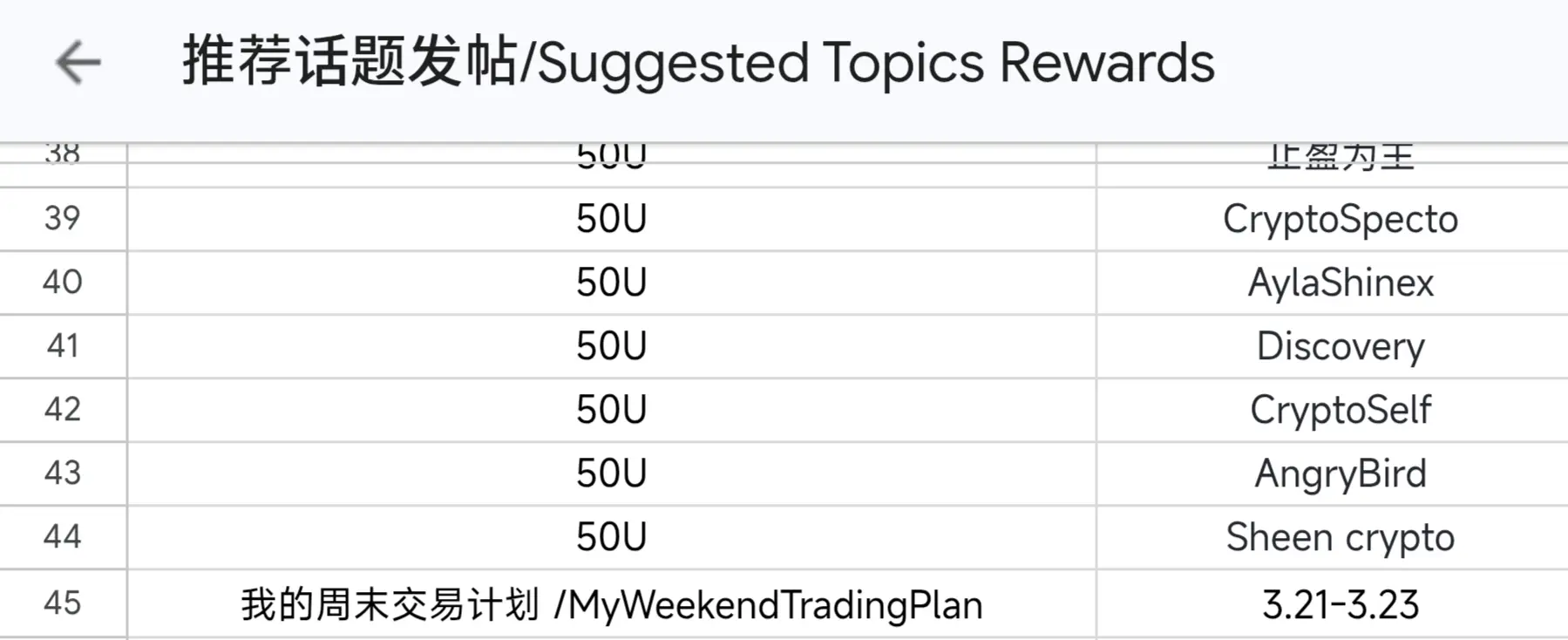
Gate Square Winner Announcement, congratulations to my friends for winning 🥰🥰🥰
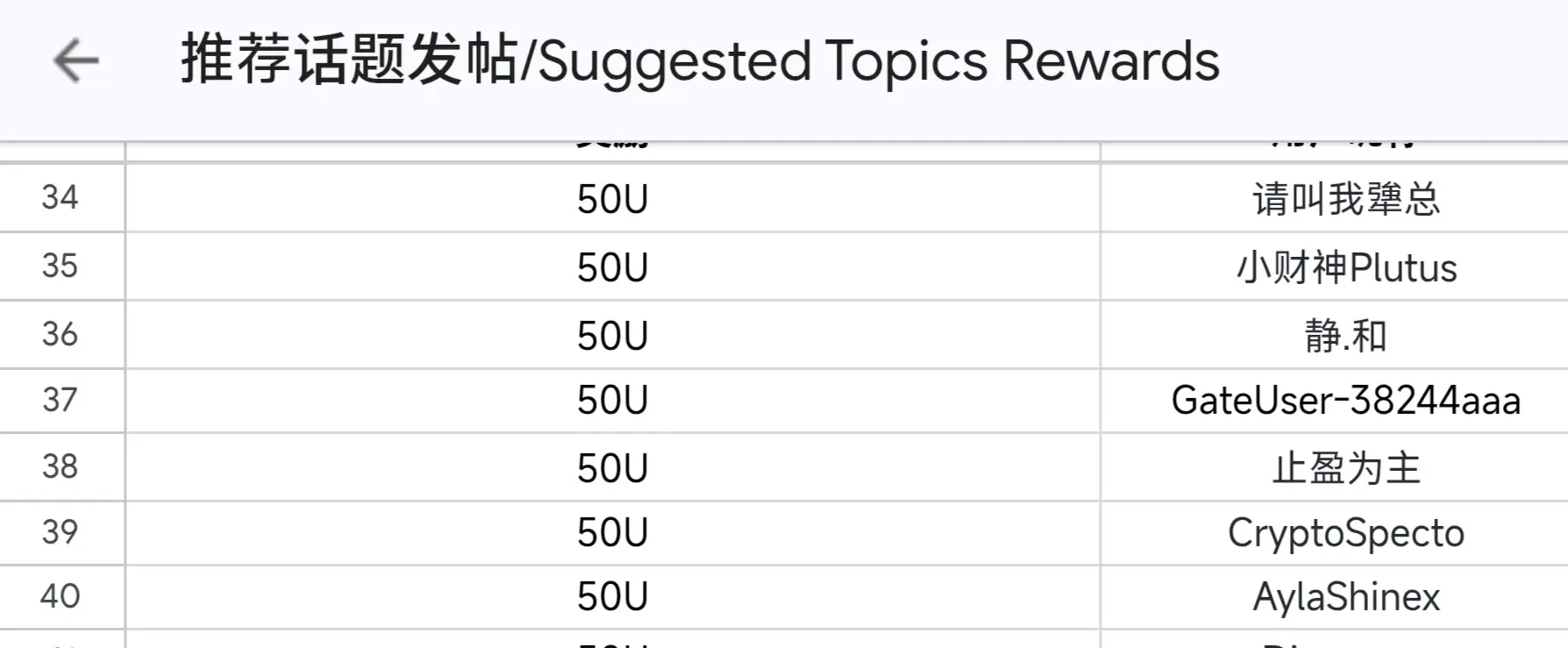
Date: 3/21-3/23 My Weekend Trading Plan /MyWeekendTradingPlan
50U Little Wealth God Plutus
50U Quiet. Harmony
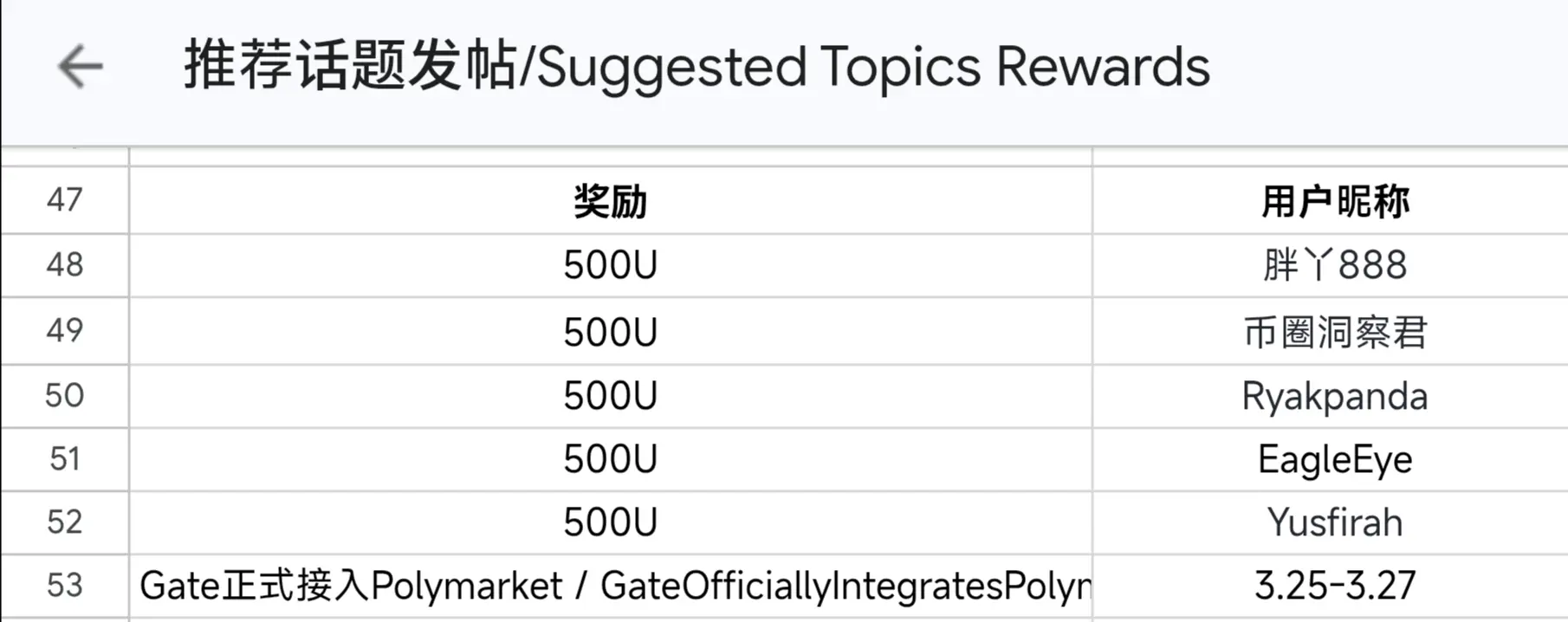
Date: 3/25-3/27 Gate officially integrates with Polymarket / GateOfficiallyIntegratesPolymarket
500U Fat Yaa888
500U Ryakpanda
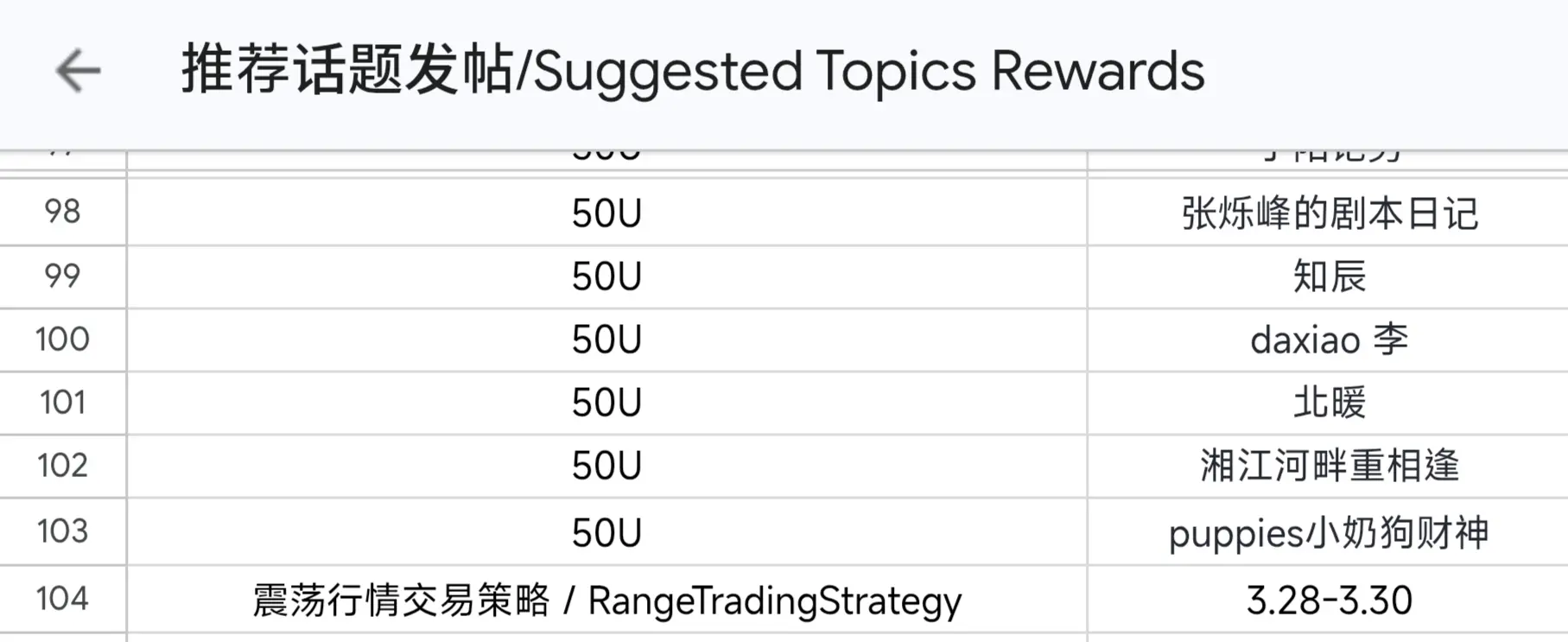
Date: 3/28-3/30 Volatile Market Trading Strategy / RangeTradingStrategy
50U North Warm
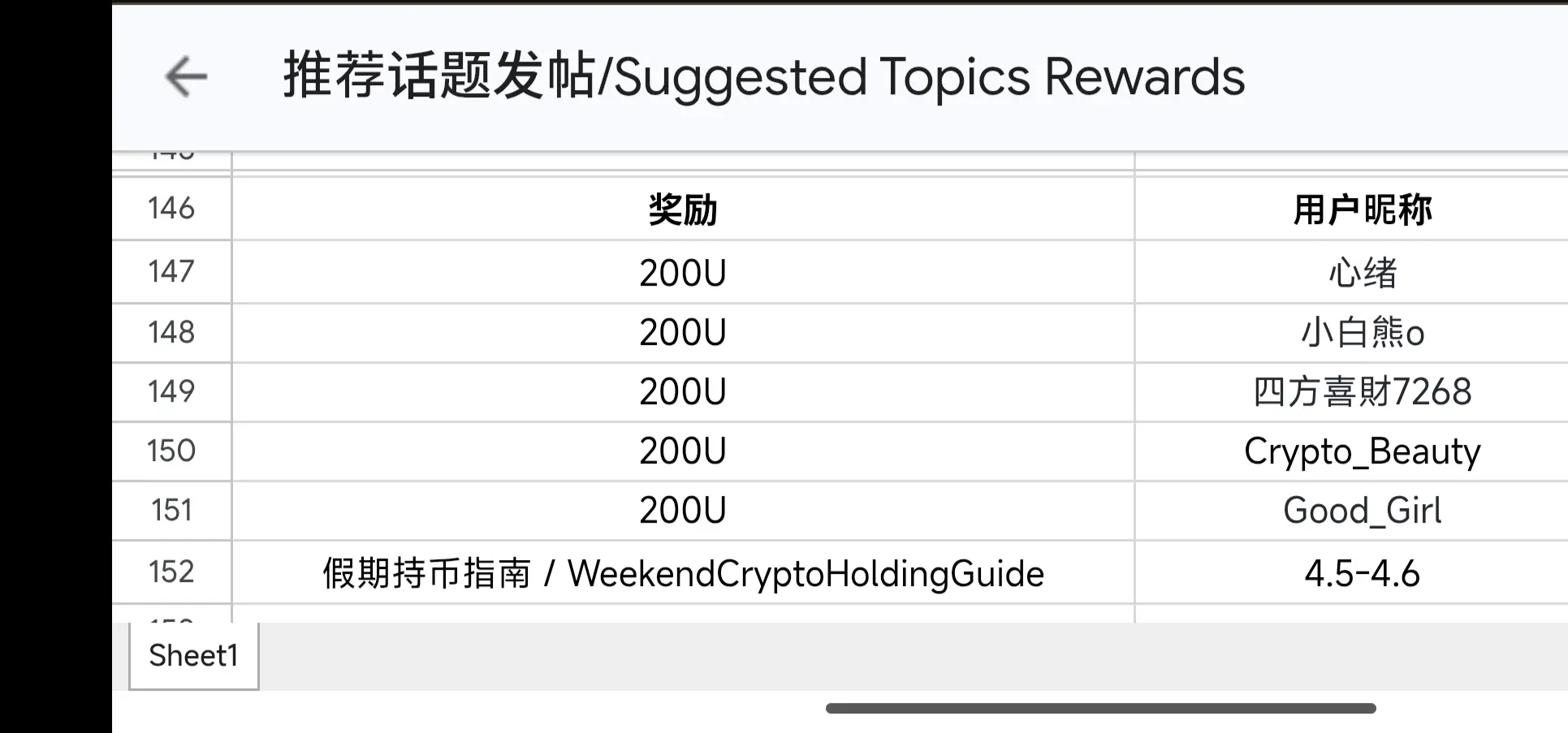
Date: 4/5-4/6 Holiday Holding Guide / WeekendCryptoHoldingGuide
200U Sifang Happy Wealth 7268
Congratulations to those who won, let’s stay motivated to continue writing goo
View Original
post-image
post-image
post-image
post-image
post-image
Gate_Square
Gate Square Winners Announcement | Suggested Topics Posts
Suggested Topics:
CryptoMarketBouncesBack, BitcoinBoomsAbove$75K, Gate13thAnniversaryGlobalCelebration, CryptoMarketVolatility, MyWeekendTradingPlan, GateOfficiallyIntegratesPolymarket, FedRateHikeExpectationsResurface, RangeTradingStrategy, CanBTCHold65K, TrumpSignalsPossibleCeasefire, AprilMarketOutlook, OilPricesRise, MarchNonfarmPayrollsDataComing, WeekendCryptoHoldingGuide, ShareMyTradingLessons
Full winners list: https://docs.google.com/spreadsheets/d/1oiKyTsjHPp2zPcCGWBzJQ9xSNqNQT3rzEs1JuMcG6Gk/edit?hl=zh-cn&gid=0#gid=0
More exciting Gate Square activities are coming soon—stay tuned!
repost-content-media
  • Reward
  • 10
  • Repost
  • Share
XiaoXiCai:
GT is king👑
View More
Dear Gate users, partners, and media friends:
This year, Gate celebrates its 13th anniversary. When I first built this platform, Bitcoin and blockchain were still very niche topics. Today, Gate has become a platform serving hundreds of millions of users worldwide. Along the way, we could not have achieved this without the trust and support of every user, partner, and team member. On the occasion of our 13th anniversary, I want to share with everyone the development history of Gate, our milestone achievements, and our thoughts on the future.
View Original
post-image
Dr.Han
Gate Founder Dr. Han's 13th Anniversary Open Letter: Unleashing the Power of Transformation Amid Cyclical Changes
Dear Gate users, partners, and media friends:
This year, Gate celebrates its thirteenth anniversary. When I founded this platform, Bitcoin and blockchain were still very niche topics. Today, Gate has become a platform serving hundreds of millions of users worldwide. Along the way, we could not have achieved this without the trust and support of every user, partner, and team member. On the occasion of our 13th anniversary, I want to share with you the development history of Gate, our milestone achievements, and our thoughts on the future.
repost-content-media
  • Reward
  • 19
  • Repost
  • Share
ybaser:
2026 GOGOGO 👊
View More
#Gate广场四月发帖挑战 4.13 Bitcoin Market: US-Iran Negotiation Breakdown Sparks Market Panic, Exercise Caution!
Crypto Circle: No significant whale activity on Monday!
Market Side:
1. Negotiations between Iran and the US in Islamabad, Pakistan, have concluded, with both sides after about 21 to 25 hours of multiple rounds of talks, failing to reach any agreement. The US side, led by Vice President Vance, proposed the “final and best plan,” emphasizing that Iran must accept its red lines, including not developing nuclear weapons and ensuring the Strait of Hormuz remains open. Iran, on the other ha
View Original
post-image
post-image
post-image
ShizukaKazu
#Gate广场四月发帖挑战 4.13 Bitcoin Market: US-Iran Negotiation Breakdown Sparks Market Anxiety, Exercise Caution!
Crypto Circle: No significant whale activity on Monday!
Market Overview:
1. Negotiations between Iran and the US in Islamabad, Pakistan, have concluded, with both sides failing to reach any agreement after approximately 21 to 25 hours of multiple rounds of talks. The US side, led by Vice President Vance, proposed a “final and best plan,” emphasizing that Iran must accept its red lines, including not developing nuclear weapons and ensuring the Strait of Hormuz remains open. Iran, on the other hand, accused the US of overreaching and making excessive demands, believing the negotiations are filled with mistrust, refusing to make concessions, and stating they are not in a hurry to start the next round.
2. On April 12, according to an official tweet from the White House, “Starting today, the most elite US Navy will begin blocking all ships attempting to enter or exit the Strait of Hormuz.” — Overall, the core disagreements in the US-Iran negotiations remain unresolved, with regional and global risks still present! In this context, Bitcoin, as a risk asset, is more sensitive, with limited upward potential. It is more appropriate to short near resistance levels!
Daily Chart: The current price remains around 71k, with the MACD golden cross and green energy bars shrinking, and a death cross beginning to form compared to previous levels.
Over the weekend, bullish momentum weakened. Today, focus should be on whether the 70k level holds. Staying above this level suggests continued upward potential for the bulls, while falling below could cause the price to re-enter a bearish atmosphere.
Overall, trading should emphasize defending the 70k integer level, and short positions near resistance are appropriate!
On the upside: initial resistance at the April high of around 73,288, with further attention to the 76k level.
On the downside: initial support at the 30-day moving average around 69,599, with further support near the lower Bollinger Band at approximately 64,640.
This article is for sharing purposes only and not investment advice!
repost-content-media
  • Reward
  • 17
  • Repost
  • Share
Ryakpanda:
Chong Chong GT 🚀
View More
#Gate广场四月发帖挑战 U.S.-Iran Standoff Escalates Again, Market Turns Anxious
The market has never lacked surprises; within just one day, both the financial sector and international affairs exploded simultaneously. On one side, the cryptocurrency market was hit with a surprise attack, plunging across the board and triggering massive liquidations, causing countless investors to lose everything overnight; on the other side, the geopolitical tension between the U.S. and Iran continued to escalate, with Iran’s firm response to Trump, and the Strait of Hormuz situation gripping global nerves.
The coll
View Original
post-image
post-image
post-image
Ryakpanda
#Gate广场四月发帖挑战 The US-Iran confrontation escalates again, and the market is panicking
The market has never lacked surprises; within just one day, both the financial sector and international situation exploded. On one side, the cryptocurrency market was suddenly attacked, plunging across the board and triggering massive liquidations, causing countless investors to lose everything overnight; on the other side, the geopolitical conflict between the US and Iran continued to intensify, with Iran firmly responding to Trump, and the Strait of Hormuz situation gripping global nerves.
The collision of these two hot topics not only stirs global capital flows but also pushes market risk aversion to the limit. Ordinary people can clearly feel that the current economy and international situation are already interconnected, with a single trigger capable of affecting the whole system.
1. Cryptocurrency prices plummeted across the board, with over 110k traders liquidated!
Cryptocurrency markets are known for their volatility, but this collective plunge still caught many investors off guard. Recently, the seemingly stable crypto space suddenly experienced a sharp decline, with mainstream coins like Bitcoin and Ethereum falling simultaneously, and the entire market echoing with cries of distress.
According to data from professional platforms, in the past 24 hours, the number of crypto traders liquidated worldwide exceeded 110k, with huge amounts of funds evaporating in a short period. Long positions were liquidated far more than short positions, and many leveraged investors faced the total loss of their principal. The sudden drop, without warning, turned players who expected prices to rise into instant losers. Even seasoned investors couldn’t escape this market shock.
This round of sharp decline was not accidental. Uncertainty in the global macroeconomy and tense geopolitical tensions have become the straw that broke the camel’s back for the crypto market. Cryptocurrencies are inherently high-risk assets, and during fragile market sentiment, even the slightest disturbance can trigger panic withdrawals. This is the core reason behind the over 110k liquidations.
2. Trump pressures Iran, and the Strait of Hormuz situation becomes tense!
Financial markets are turbulent, and international geopolitics is equally fiery. Trump issued a tough stance toward Iran, demanding Iran open the Strait of Hormuz, even threatening to blockade Iran, trying to force Iran to compromise.
The Strait of Hormuz is considered a global energy chokepoint, with nearly one-third of the world’s oil shipments passing through here. If the situation in the strait spirals out of control, global energy supply and oil prices will experience violent shocks, affecting industries worldwide. Trump’s pressure has undoubtedly pushed the already sensitive Middle East situation to the brink of conflict, prompting risk-averse capital to seek safe havens, further amplifying volatility across various assets.
Every confrontation in international affairs doesn’t stay confined to politics; energy, finance, commodities, and other markets are all interconnected. The US-Iran standoff has long exceeded regional conflict, becoming a key variable influencing global economic stability, and indirectly contributing to the crypto crash.
Iran’s firm response, and the complete ignition of geopolitical risk!
Faced with Trump’s threats, Iran did not back down at all, issuing a tough response, clearly stating that even if Iran blocks the strait, it cannot be opened. Iran also signaled that if attacked, it will take countermeasures, affecting energy facilities across the Middle East, and global oil prices will surge accordingly.
Iran’s tough stance has escalated the US-Iran confrontation, fully igniting geopolitical risks and triggering global market panic. Investors worry that the conflict will further escalate, impacting global supply chains, energy prices, and economic recovery. This panic quickly spread to financial markets, leading to sell-offs in cryptocurrencies, stocks, and other risk assets, creating a chain reaction of worsening conflicts and market declines.
Many ordinary people may think international affairs are distant from themselves, but in reality, even a slight disturbance in the strait can push up oil prices, increase living costs, and cause market volatility that affects everyone’s investments and wealth. No one can truly stay unaffected.
Under double pressure, how should ordinary people protect their wealth?
The wave of crypto liquidations combined with geopolitical conflicts has pushed the global markets into a high-risk phase. For ordinary individuals, blindly following trends or leveraging for speculation is essentially risking their own wealth.
First, stay away from high-risk speculative behaviors. Crypto volatility is extreme, and the over 110k liquidations serve as a stark lesson. Without sufficient risk tolerance, avoid reckless involvement.
Second, hedge assets wisely. During escalating geopolitical tensions and market instability, reduce risk asset allocations and prioritize stable financial management. Protecting principal is more important than chasing high returns.
Also, keep a close eye on international developments, such as the situation in the Strait of Hormuz and US-Iran relations, as they will continue to influence global markets. Staying informed helps better avoid potential risks. Don’t be misled by short-term market fluctuations; maintain rationality, avoid blindly bottom-fishing, and choose the most prudent approach.
The global markets are already interconnected; financial turmoil and geopolitical conflicts are intertwined. In the coming period, market volatility will likely persist. Whether you’re a crypto investor or an ordinary person, stay alert, think rationally about market changes, and protect your wealth in the face of uncertainty—that’s the key to navigating today’s complex environment.
Never underestimate market risks, nor ignore the influence of international affairs. Respect risk, move steadily, and only then can you stabilize your life and wealth amid a complicated market environment.
repost-content-media
  • Reward
  • 16
  • Repost
  • Share
Ryakpanda:
Rapid return of the bull 🐂
View More
#Gate广场四月发帖挑战 The pullback is here—are you panicking?


Last night you were still yelling "Charge, charge, charge," and this morning you check your account—
BTC: 73,000 →71,068 (-2.67%)
ETH: 2,285 →2,201 (-3.65%)
SOL: 84.74 →81.99 (-3.25%)
Fear Index: 12 (Extreme Fear)
One night later, the bulls are buried; the bears wake up laughing. 
🤔 Why did it drop? Three reasons—each more convincing than the last:
① Pre-earnings hedging ahead of BlackRock’s report
Tomorrow (April 14), BlackRock will release
BTC4,55%
ETH6,2%
SOL3,14%
View Original
post-image
post-image
post-image
Ryakpanda
#Gate广场四月发帖挑战 The callback has arrived, are you panicking?
Last night you were shouting "Charge, charge, charge," and this morning when you check your account—
BTC: 73,000 → 71,068 (-2.67%)
ETH: 2,285 → 2,201 (-3.65%)
SOL: 84.74 → 81.99 (-3.25%)
Fear Index: 12 (Extreme Fear)
Woke up to find the bulls buried, the bears laughing awake.
🤔 Why did it fall? Three reasons, each more convincing than the last:
1. Bailing out before the earnings report
Tomorrow (April 14), BlackRock will release its Q1 earnings report, the world's largest asset management firm, with $14 trillion in assets. The market is waiting for BTC/ETH ETF fund flow data. No one dares to hold positions before the earnings report—that's Wall Street's muscle memory.
2. Selling pressure before tax season
April 15 is the US tax deadline. Every year around this time, Americans sell coins to pay taxes, draining liquidity.
Historical experience: In the week before April 15, BTC typically drops 3-5%.
3. Profit-taking
BTC rose from 70,000 to 73,000 (+4.3%), short-term funds are cashing out. This isn't a crash; it's a normal correction.
📊 BTC Technical Analysis
Current position: $71,068
Resistance 1: $72,800 Short-term pressure
Resistance 2: $74,500 Previous high
Current price: $71,068 Pullback in progress
Support 1: $70,000 Psychological level
⭐ Support 2: $68,500 Strong support
Support 3: $65,000 Extreme support
One sentence: $70,000 is the bottom line—if it breaks, add positions; if not, wait.
📊 ETH Technical Analysis
Current position: $2,201
Resistance 1: $2,350 Short-term pressure
Resistance 2: $2,500 Previous high
Current price: $2,201 Pullback in progress
Support 1: $2,150 Last low
Support 2: $2,000 Psychological level
⭐ Support 3: $1,800 Extreme support
One sentence: $2,000 is the golden buy zone—buy the dip (in batches).
🦾 SOL: The strongest Layer 1
Current position: $81.99
Why did SOL fall the least this round?
• TVL hit a record high
• DePIN ecosystem continues to expand
• Developer activity remains unaffected by bull or bear markets
• Institutions keep buying
SOL is this bear market’s "Noah’s Ark." Below 80 is a money zone, below 70 is like getting a pie from the sky.
🎯 Trading Strategy
If you hold positions: If your cost is below the current price, hold and do nothing.
If your cost is above the current price, wait for the $70,000 support to test leveraged positions.
Reduce leverage before tax season.
If you are out of the market: Build positions gradually at $70,000–$71,000, add 20% at $68,500–$70,000, increase to 50% at $65,000–$68,500, go all-in (if you dare).
⏰ This Week’s Timeline
Today 4/13: Goldman Sachs earnings report, watch and wait
Tomorrow 4/14: BlackRock earnings report ⭐⭐⭐⭐⭐ Decide after earnings, 4/15: Tax deadline, reduce or hold
Starting 4/16: Liquidity recovers, increase positions
💡 One sentence summary
Pullbacks are opportunities, not disasters. When the Fear Index is at 12, you’re afraid to buy; when it’s at 80, you’re even more afraid. $70,000 is the bottom line—if it breaks, add; if not, wait. BlackRock’s earnings will decide the outcome, and the real story unfolds after April 15. Don’t waste time now—control yourself.
repost-content-media
  • Reward
  • 16
  • Repost
  • Share
Ryakpanda:
Steadfast HODL💎
View More
✍️ Gate Square Creator Certification Incentive Program is now recruiting!
Join Gate Square, create and share to earn rewards of over $10k USD each month!
Token prize pools, exclusive Gate merchandise, promotional opportunities, and massive traffic exposure await you! 🚀
We welcome Gate-certified creators and high-quality creators from other platforms to apply!
Apply now 👉 https://www.gate.com/questionnaire/7159
📘 More details: https://www.gate.com/announcements/article/47889
For detailed information about creator certification: https://www.gate.com/help/community-center/moments/4
View Original
post-image
Gate_Square
✍️ Gate Square Creator Certification Incentive Program Is Recruiting!
Join Gate Square and create to share over $10,000 in monthly rewards!
Token prize pools, exclusive Gate merch, promotion opportunities, and massive traffic exposure await! 🚀
Both Gate certified creators and high-quality creators from other platforms are welcome to apply!
Apply now 👉 https://www.gate.com/questionnaire/7159
📘 More details: https://www.gate.com/announcements/article/47889
Details about creator certification: https://www.gate.com/help/community-center/moments/47731/gate-square-creator-certification-guidelines
repost-content-media
  • Reward
  • 14
  • Repost
  • Share
XiaoXiCai:
GT is King👑
View More
Good morning! Blue Lobster has taken over Square 🦞🔵
GateClaw, focused on thinking and executing.
We are still discussing the market — the Strait blockade shocks cryptocurrencies, BTC drops below 71K. Preparations for the initial public offering and Gate's 13th anniversary are also heating up. Blue Lobster will support you.
Leave your thoughts below 👇
#GateClaw #GateBlueLobster #GateSquare
BTC4,55%
View Original
post-image
Gate_Square
GM!Blue Lobster has taken over the Square 🦞🔵
GateClaw, built to think and execute.
We still talk markets — Strait blockade shakes crypto, BTC pulls back below 71k. Pre-IPOs and Gate‘s 13th anniversary are also heating up. Blue Lobster’s got your back.
Drop your thoughts below 👇
#GateClaw #GateBlueLobster #GateSquare
repost-content-media
  • Reward
  • 12
  • Repost
  • Share
XiaoXiCai:
Get in the car now!🚗
View More
Tom Lee states that the market has shown clear signs of bottoming out and remains optimistic about Ethereum and Bitcoin. This article combines on-chain data and Gate market trends to provide an in-depth analysis of this Wall Street analyst's latest perspective.
ETH6,2%
View Original
post-image
GateInstantTrends
Crypto Market Bottoming Signals: Tom Lee’s Latest Views and On-Chain Data Verification
Tom Lee says the market has shown clear bottoming signals and he continues to be bullish on Ethereum and Bitcoin. This article combines on-chain data with Gate market data to provide an in-depth analysis of this latest view from the Wall Street analyst.
repost-content-media
  • Reward
  • 17
  • Repost
  • Share
XiaoXiCai:
Volatility is an opportunity 📊
View More
#Gate广场四月发帖挑战
The king of privacy coins returns? - Will Monero, Zcash, or Dash lead the market?‌‌‌‌‌‌
Recently, ZEC and Dash have surged strongly, both increasing over 50% in a week, drawing all the market’s attention. Additionally, privacy coin teams have been active lately. Monero is expected to launch its mainnet within 1–2 months, with the chain client already passing simulated tests and entering the code review and testnet phases; meanwhile, Bittensor is developing in parallel, planning to launch simultaneously with XMR, and Zcash aims to connect before the end of April. The core ch
ZEC3,6%
DASH-3,63%
View Original
post-image
LittleGodOfWealthPlutus
#Gate广场四月发帖挑战
The king of privacy coins returns? - Will Monero, Zcash, or Dash lead the market?‌‌‌‌‌‌
Recently, ZEC and Dash have surged strongly, both increasing over 50% in a week, drawing all the market’s attention. Additionally, privacy coin teams have been active lately. Monero is expected to launch its mainnet within 1–2 months, with the chain client already passing simulated tests and entering the code review and testnet phases; meanwhile, Bittensor is developing in parallel, planning to launch simultaneously with XMR, and Zcash aims to connect by the end of April. The core challenge of this integration is the observability issue of privacy chains, which the team plans to address by introducing Frost-based multi-party signature mechanisms and dedicated validation node structures. So, are privacy coins making a comeback? Among the three major privacy coins XMR, ZEC, and Dash, who will lead this round of market movement? Let’s hear what Xiao Caishen has to say.
Monero (XMR): The leader in default privacy, with the largest market cap
Monero maintains its leading position among privacy coins thanks to its core design of “default privacy and enforced anonymity.” It employs ring signatures, stealth addresses, and confidential transactions to automatically hide all transaction senders, receivers, and amounts, cutting off on-chain traceability.
As of April 10, XMR’s price is $331, down 1.99% in 24 hours. According to ET Now data, its market cap is approximately $6.09 billion, with a circulating supply of about 18.45 million coins, and a 24-hour trading volume of around $57.25 million. The price peaked at about $799 earlier this year, then retraced to around $490. In this market cycle, XMR’s price has hardly moved, remaining flat on the daily chart.
Zcash (ZEC): Accelerating institutional transformation and reshaping governance
Zcash features optional anonymity, allowing users to choose between transparent transactions or shielded transactions via zk-SNARKs zero-knowledge proofs. In March 2026, Foundry Digital launched an institutional-grade mining pool for it. Meanwhile, the original core development team established the Zcash Open Development Lab, receiving a seed round of $25 million from investors including a16z Crypto and Coinbase Ventures, focusing on Zodl wallet development and ecosystem expansion. Currently, over 30% of ZEC supply is held in shielded pools, with demand for shielded transactions continuing to rise.
As of April 10, 2026, ZEC’s price is $390, having risen from $248 to a high of $395 within five days, with a gain of over 50% in that period and significantly increased trading volume. According to ET Now data, its market cap is about $5.91 billion, with a circulating supply of approximately 18.45 million coins, and a 24-hour trading volume of around $57.25 million. Analysts believe 2026 will be a pivotal year for Zcash to transition from a “niche tool” to a “core infrastructure.”
Dash (DASH): Privacy payment network in technological upgrade
In February 2026, Dash announced the integration of Zcash’s Orchard shielded pool into its Evolution chain. Additionally, initial support for standard transfers with shielded transactions will be expanded in future upgrades to cover on-chain tokenized assets. In our view, Orchard is an open-source and mature technology, with integration difficulty lower than expected. Combined with Dash’s years of self-developed technology, it will provide users with a better privacy experience.
As of April 10, DASH’s price is $45.71, with a market cap of about $560 million, a circulating supply of 12.65 million coins, and a 35% increase on April 8 alone. During the same period, $41.46 million in derivatives funds flowed in, indicating active institutional and speculative positions, demonstrating strong performance in the privacy coin rotation market.
Summary: From a technical and ecological perspective, Monero has a clear advantage in market cap and user recognition, making it the largest. However, similar to Bitcoin’s role in cryptocurrencies, its large market cap results in smaller price fluctuations and limited arbitrage opportunities. Zcash, with institutional capital injection, technological upgrades (NU7 and Zebra node migration), and a compliance-friendly optional anonymity mode, is most likely to find development space under regulatory environments. Dash, with a relatively smaller market cap and rapid ongoing upgrades, is a project with strong short-term explosive potential. Overall, ZEC is a relatively good choice both in fundamentals (technology and compliance) and price explosion potential.
What are your thoughts? Will ZEC lead another wave of privacy coin “rises”? Any ideas? Leave your comments!
repost-content-media
  • Reward
  • 17
  • Repost
  • Share
XiaoXiCai:
GT is king 👑
View More
#Gate广场四月发帖挑战
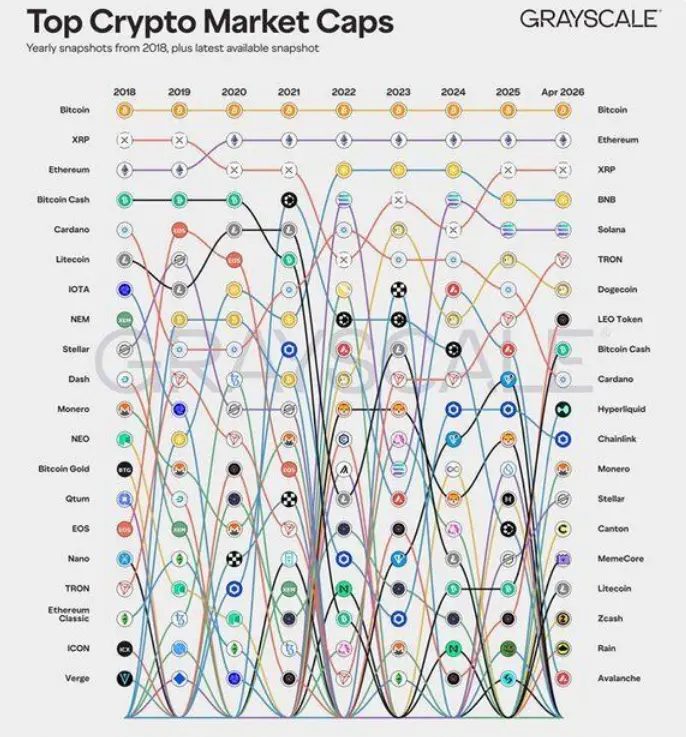
How many of the once-mainstream coins are left?
Bitcoin has maintained the top spot in market capitalization for 8 consecutive years, while only half of the top ten mainstream coins in 2018 remain on the list today. A chart comparing market caps over 8 years ruthlessly reveals the survival rule of the crypto market: true value is anchored in long-term consensus, and hype narratives will eventually zero out.
After the big waves, which assets have survived the cycle? How many of the once-mainstream coins are still around?
Looking back at the top ten tokens by market cap in
BTC4,55%
ETH6,2%
XRP2,99%
TRX0,68%
View Original
post-image
LittleGodOfWealthPlutus
#Gate广场四月发帖挑战
How many of the once-mainstream coins are left?
Bitcoin has maintained its position as the top market cap in the crypto industry for eight consecutive years, while only half of the top ten mainstream coins from 2018 remain on the list today. An eight-year market cap comparison chart ruthlessly reveals the survival rule of the crypto market: true value is anchored in long-term consensus, and hype narratives will eventually zero out. After the big waves wash away the sand, which assets have survived the cycle? How many of the once-mainstream coins are still around?
Looking back at the top ten tokens by market cap in 2018, only BTC, ETH, XRP, TRX, and ADA remain, accounting for half.
Bitcoin has ranked first for eight consecutive years, holding the top spot in market cap from 2018 to 2026. As of early April 2026, Bitcoin's price has rebounded above $70k, with a total market cap of approximately $1.34 trillion, accounting for over 55% of the total crypto market cap. Despite multiple bear markets and regulatory crackdowns by major global economies, the industry ranking has never changed.
Ethereum remains firmly in second place, maintaining its dominance as the smart contract platform. Even with numerous new competitors chasing, none have surpassed it, with a current market cap of about $250–260 billion.
XRP's market cap is around $70 billion, having fallen from its peak in 2025. ADA and TRX currently have market caps of approximately $9.13 billion and $30.1 billion, respectively. The former relies on academic-driven ecosystem development, while the latter has built a strong fundamental support through its USDT stablecoin settlement network.
【The Yesterday’s Stars That Have Fallen Out of the Mainstream】
BCH, EOS, LTC, XLM, and MIOTA have all exited the scene. Of the top 15 by market cap in 2018, half have completely fallen out of the top 20 by 2026. This includes EOS, which once raised $4 billion, as well as Dash, NEO, Qtum, Bitcoin Gold, Nano, and other projects that have now disappeared from view.

【Emerging New Forces】
USDT and USDC, the two major stablecoins, have entered the top ten. As of early April, their market caps reached $184.07 billion and $77.5 billion, respectively, accounting for nearly 85% of the total stablecoin market cap. Institutional capital inflows continue to boost their demand.

SOL and BNB have upgraded to core infrastructure roles. SOL's market cap is about $47.9 billion, and BNB's is around $84 billion. Both are positioned as high-performance public chains, occupying advantageous positions in mid- to long-term ecosystem competition.
DOGE, with a market cap of about $14.2 billion, is the only Meme coin in the top ten, validating the community consensus as a unique survival value in the crypto market.
【Why has Bitcoin remained the number one for 8 years?】
First, the decentralized underlying value consensus. As the original cryptocurrency, Bitcoin has no project team and no unlocking sell pressure, serving as the industry’s pricing benchmark and safe-haven asset.
Second, the institutionalization trend continues to deepen. After the approval of Bitcoin spot ETFs, traditional capital channels opened. A large amount of long-term allocation funds flowed in, and by early April 2026, the total net assets of US-based spot Bitcoin ETFs exceeded $90 billion, about 6.46% of Bitcoin's total market cap, with a cumulative net inflow of approximately $56.4 billion.
Among them, the IBIT fund managed by BlackRock has about $52 billion in assets, holding approximately 782k BTC, accounting for nearly 45% of all spot Bitcoin ETF assets. We believe that institutional capital is reshaping Bitcoin’s pricing system and market structure through regulated ETF channels. The stable 55.27% market cap share of Bitcoin is one of the main reasons it has maintained the top spot for eight years.
Third, narrative iteration continues. From “digital gold” to “on-chain government bonds,” Bitcoin is occupying a core position in the global asset allocation framework.
【Summary】
Whether it’s Bitcoin’s eight-year dominance, Solana’s rise from obscurity to the top five, or the fall of star projects like EOS, they all point to the same conclusion: the淘汰 in the crypto market is more brutal than imagined.
When choosing long-term investment tokens, it is recommended to focus on three dimensions: first, the project’s technical foundation and practical application; second, the sustainability of the token economic model; third, the team’s execution ability and governance transparency.
Bitcoin’s eight-year first-place record provides an important reference framework: when the tide recedes, only true value can stand firm.
repost-content-media
  • Reward
  • 15
  • Repost
  • Share
XiaoXiCai:
Just charge forward 💪
View More
#Gate广场四月发帖挑战 U.S.-Iran Negotiations Fail: Next Week's Global Asset Class Trend Analysis
The related talks between the U.S. and Iran failed to reach a consensus, with core disagreements remaining. The geopolitical uncertainty will have a significant impact on the trend of various global assets next week, and different categories may show notable divergence.
Gold, as a traditional safe-haven asset, has its risk-averse properties highlighted under geopolitical uncertainty. It is highly likely to remain in a high-level oscillation pattern next week. The current Federal Reserve interest rate e
BTC4,55%
View Original
ShizukaKazu
#Gate广场四月发帖挑战 U.S.-Iran Negotiations Fail: Next Week's Global Asset Class Trend Analysis
The talks between the U.S. and Iran failed to reach a consensus, with core disagreements remaining. The geopolitical uncertainty will significantly impact the trend of various global assets next week, and different asset categories may show notable divergence.
Gold, as a traditional safe-haven asset, has its risk-averse properties highlighted under geopolitical uncertainty. It is highly likely to remain in a high-level oscillation pattern next week. The current Federal Reserve interest rate environment and technical pressures from previous price movements will impose certain constraints on gold prices. Gold in London is likely to trade within the range of $4,700–$4,850 per ounce, with market prices influenced by multiple factors, leading to considerable volatility.
Silver's movement is strongly correlated with gold and possesses both commodity and industrial attributes. Influenced by geopolitical factors and energy price fluctuations, its price volatility may be more pronounced. London silver is currently oscillating between $73–$78 per ounce, with overall market sentiment-driven movements being more flexible.
Bitcoin is a high-volatility risk asset and does not have the characteristics of a traditional safe-haven asset. As global market risk appetite adjusts, its price is likely to face downward pressure. Next week, it may trade within the range of $68,000–$73,000, with overall trends leaning toward oscillation and adjustment. Its price is heavily affected by market capital flows.
Global stock markets' overall risk appetite may cool down, with sector and regional performance divergence intensifying. Geopolitical factors are boosting inflation expectations, which in turn influence global monetary policy expectations. Overall market valuations face certain pressures. Sectors such as military industry, energy, and precious metals may perform relatively steadily, while high-valuation technology, aerospace, and consumer sectors may face adjustment pressures. U.S. stocks are expected to maintain a high-level oscillation, while A-shares are likely to fluctuate within the range of 3,900–4,050 points.
In summary, geopolitical uncertainties are the core influencing factors for the market next week. Asset prices will be driven by macroeconomic conditions, market sentiment, and other multiple factors, resulting in high uncertainty in their trends.
This article's content is solely an objective market trend analysis and does not constitute any investment advice.
repost-content-media
  • Reward
  • 14
  • Repost
  • Share
XiaoXiCai:
Confident HODL💎
View More
  • Pin