What Is the Fundamental Difference Between Futures Trading and Spot Trading? An Analysis Using Gate as an Example

Beginner
Quick Reads
Last Updated 2026-03-26 13:25:14
Reading Time: 1m
Contract trading is not just a straightforward upgrade of spot trading. This article uses Gate as a case study to examine the essential differences between contract trading and spot trading, focusing on trading mechanisms, capital utilization, and feature design. The goal is to help newcomers assess whether entering the contract market aligns with their needs.

Why Contract Trading Functions Are Not Equivalent to Spot Trading
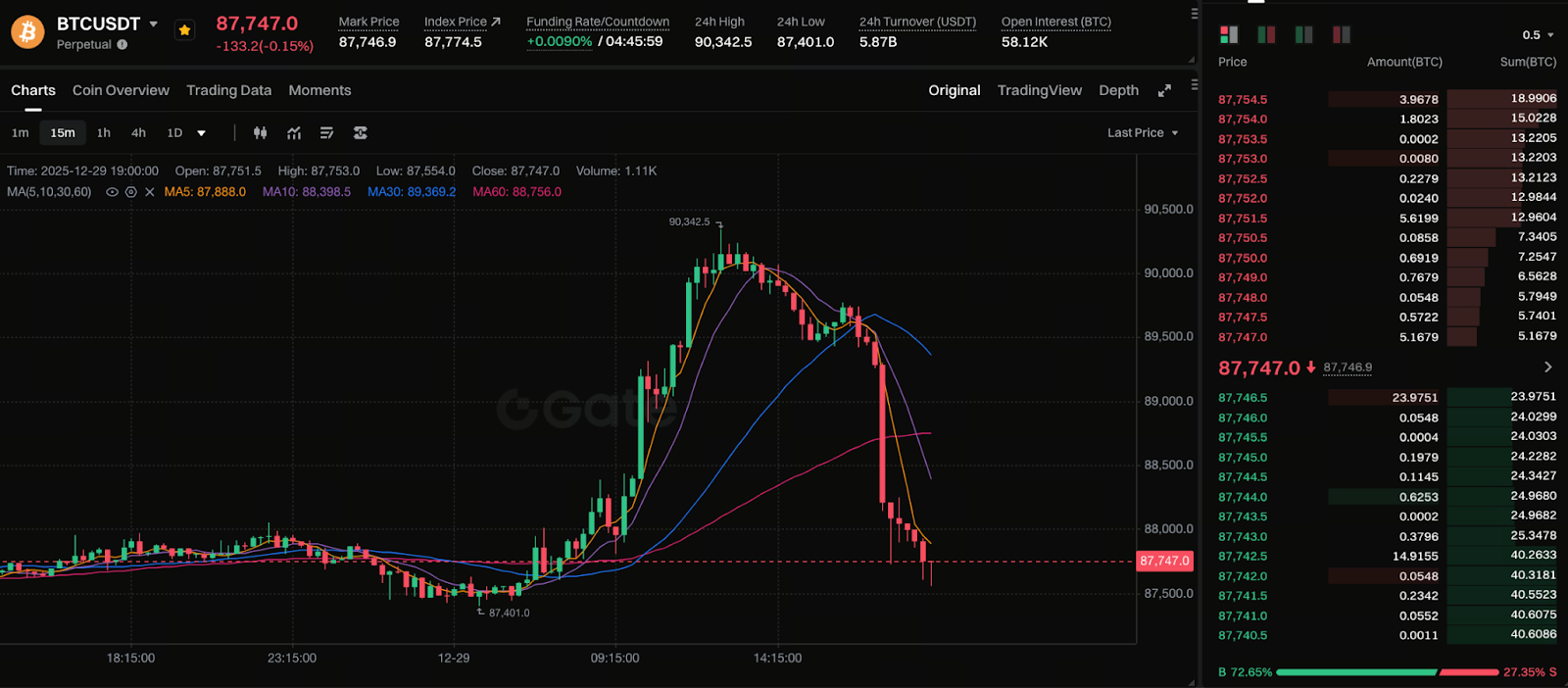

Image source: https://www.gate.com/futures/USDT/BTC_USDT

Many newcomers mistakenly assume that contract trading is simply “spot trading with leverage.” In fact, the underlying mechanics of contract trading functions differ fundamentally from spot trading.

On Gate, not only is the user interface distinct, but the way funds are managed and the risk models employed are fundamentally different.

Key Differences in Trading Instruments and Settlement Methods

With spot trading, users purchase the actual asset. In contract trading functions, users trade price contracts rather than acquiring ownership of the asset itself.

As a result:

  • Contracts do not require holding the underlying asset
  • Profits and losses are settled via margin
  • Positions can remain open indefinitely (perpetual contracts)

This marks the first major dividing line between contract trading and spot trading.

The Margin Mechanism in Contract Trading Functions

On Gate, funds used in contract trading functions are not fully deployed upfront. Instead, they exist as margin.

The margin mechanism brings several implications:

  • Greater capital efficiency
  • Amplified profit and loss volatility
  • Stricter requirements for position management

This means contract trading functions focus more on “risk control” rather than “long-term holding.”

How Leverage Alters Trading Logic

In spot trading, a decline in price leads only to unrealized losses. In contract trading functions, leverage causes price fluctuations to directly impact account safety. Within Gate’s contract system:

  • Higher leverage reduces the amount of fluctuation your position can withstand
  • The same market move can result in dramatically different outcomes

Consequently, contract trading functions are not suitable for impulsive decisions or indiscriminate position increases.

The Significance of Long and Short Positions in Contracts

Spot trading typically focuses on “buying and hoping for a price increase.” Contract trading functions allow users to:

  • Go long (bullish)
  • Go short (bearish)

This adds significant strategic flexibility to contract trading, but also demands that users apply clear judgment and logic—rather than simply betting on market direction.

Discipline Requirements for Contract Trading Functions

Compared to spot trading, contract trading functions require a higher degree of discipline:

  • You must plan stop-losses in advance
  • You must control your position size
  • You must understand forced liquidation rules

Gate provides robust system support for these functions, but their application ultimately depends on the trader’s choices.

Essential Insights for Spot Traders Before Switching to Contracts

Many users fail when transitioning from spot to contracts not due to poor market judgment, but because they haven’t shifted their mindset.

Key points to recognize:

  • Contract trading is not about long-term coin holding
  • Contract trading functions are primarily risk management tools
  • Contract trading serves “strategy,” not “emotion”

Gate’s contract trading functions are already highly developed, but a learning curve remains for users.

Conclusion: Choosing the Right Trading Approach Is More Important Than Profit

Contract trading functions are not suitable for everyone. Their strengths lie in flexibility and efficiency, but they also involve greater risk and stricter operational discipline. On a mature platform like Gate, contract trading functions are highly refined. The real question isn’t “can you use them,” but “are they truly right for you.”

Grasping this is the most important lesson before entering the contract trading market.

Author: Max
Disclaimer
* The information is not intended to be and does not constitute financial advice or any other recommendation of any sort offered or endorsed by Gate.
* This article may not be reproduced, transmitted or copied without referencing Gate. Contravention is an infringement of Copyright Act and may be subject to legal action.

Related Articles

What is Fartcoin? All You Need to Know About FARTCOIN
Intermediate

What is Fartcoin? All You Need to Know About FARTCOIN

Fartcoin (FARTCOIN) is a representative meme coin within the Solana ecosystem based on an AI-driven narrative. Its core concept originated from an experiment aimed at exploring the "boundaries between AI Agents and humor." More than just a digital asset with social attributes, the project deeply couples absurd humor culture with on-chain financial logic by integrating autonomous AI interaction models.
2026-04-04 22:01:19
Gold Price Forecast for the Next Five Years: 2026–2030 Trend Outlook and Investment Implications, Could It Reach $6,000?
Beginner

Gold Price Forecast for the Next Five Years: 2026–2030 Trend Outlook and Investment Implications, Could It Reach $6,000?

Analyze current gold price trends alongside authoritative five-year forecasts, integrating an evaluation of market risks and opportunities. This gives investors insight into the potential trajectory of gold prices and the main drivers expected to shape the market over the next five years.
2026-03-25 18:13:30
Aster vs Hyperliquid: Which Perp DEX Will Prevail?
Beginner

Aster vs Hyperliquid: Which Perp DEX Will Prevail?

Aster and Hyperliquid are the two representative protocols of the "purpose-built L1 path" within the current decentralized perpetual exchange (Perp DEX) sector. As a pioneer in the field, Hyperliquid has built a deep liquidity moat through its highly mature order book architecture and strong community consensus. Conversely, Aster, as a rising challenger, seeks to leapfrog the competition in high-performance trading through more aggressive multi-chain aggregation logic, private transaction modules, and an underlying execution environment optimized for 2026 market demands.
2026-03-24 11:58:33
2026 Silver Price Forecast: Bull Market Continuation or High-Level Pullback? In-Depth Analysis of Silver Candlestick Chart
Beginner

2026 Silver Price Forecast: Bull Market Continuation or High-Level Pullback? In-Depth Analysis of Silver Candlestick Chart

2026 Silver Price Forecast: Latest Outlook This article integrates current market trends, silver candlestick chart analysis, and momentum factors to assess the potential key support and resistance levels, upside targets, and pullback risks for silver prices. The goal is to help investors make informed, rational decisions.
2026-03-25 16:08:59
ASTER Tokenomics: Buybacks, Burns, and Staking as the Value Foundation of ASTER in 2026
Beginner

ASTER Tokenomics: Buybacks, Burns, and Staking as the Value Foundation of ASTER in 2026

ASTER is the native equity and governance token of the Aster ecosystem, with its core value built upon a radical "Deflationary Engine." Beyond serving as a governance tool, ASTER integrates multiple utilities including staking rewards, trading fee discounts, and liquidity incentives. Through its deep integration with the upcoming dedicated Layer 1 mainnet, it enables direct value capture from protocol cash flow to token holders.
2026-03-25 07:38:07
Crypto Future Profit Calculator: How to Calculate Your Potential Gains
Beginner

Crypto Future Profit Calculator: How to Calculate Your Potential Gains

Crypto Future Profit Calculator helps traders estimate potential earnings from futures contracts by considering entry price, leverage, fees, and market movement.
2026-04-03 23:27:09