As blockchain and artificial intelligence (AI) technologies continue to converge, Sentient has emerged as a highly watched open-source artificial general intelligence (AGI) ecosystem project. Through decentralized protocols and token-based incentive structures, it aims to break the technological monopolies of closed AI giants and enable developers, researchers, and data contributors worldwide to participate fairly in the construction of AGI networks and the distribution of value.
This article offers an in-depth exploration of what Sentient is, its architecture, ecosystem, token mechanisms, developer support, community incentive strategies, and its potential evolution within the future AI plus blockchain landscape.
What Is Sentient? An Analysis of Its Core Protocol and Operating Mechanisms
Source: Sentient
Sentient is an open-source protocol platform that combines blockchain and AI, designed to create an open, community-built artificial general intelligence economy. Its core objective is to enable AI models, intelligent agents, data sources, and tool modules to collaborate within a decentralized, transparent, and monetizable ecosystem.
Core Mission
For a long time, the AI industry has been dominated by a small number of large corporations such as OpenAI, Google, and Anthropic, which control advanced model development, data access, and recognition algorithms. This concentration has led to technological monopolies, opaque model ownership, and unequal value distribution. Sentient’s vision is to build a decentralized, open-source, and contributor-fair AGI network, allowing participants from around the world to share value and governance rights at the protocol level.
Core Operating Mechanism: The GRID
Source: Sentient Blog
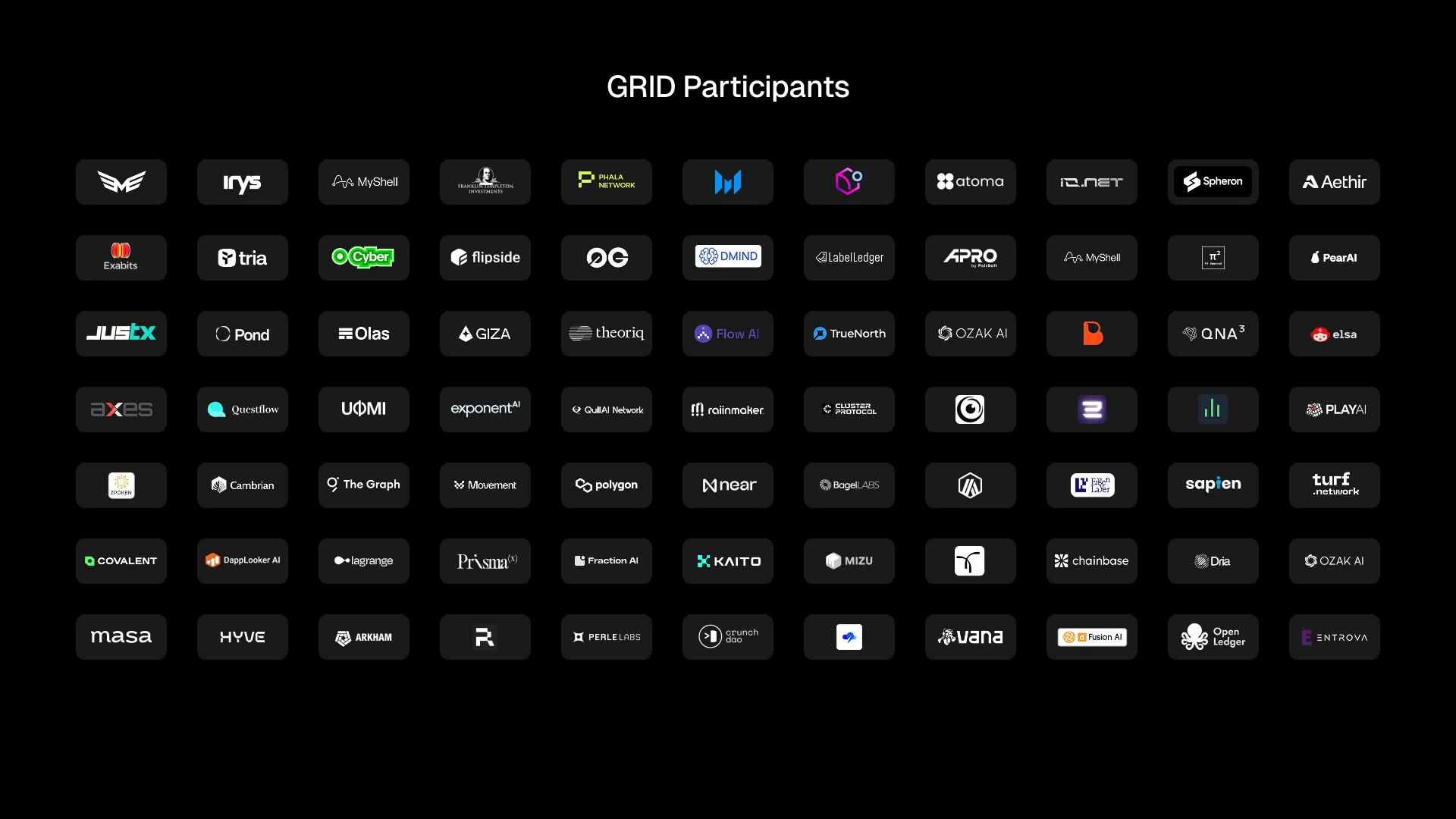
The core of the Sentient protocol is called The GRID, short for Global Repository of Intelligence & Research Directory. GRID is an integrated network used to organize and coordinate ecosystem assets such as AI agents, models, data, tools, and compute providers. It allows builders to connect their models and tools as “Artifacts,” which are then coordinated by the protocol to respond to user requests.
Futhur reading: How Does Sentient Work? An In-Depth Analysis of Its Core Protocols and Operating Mechanisms
What Kind of Applications and Ecosystem Is Sentient Building?
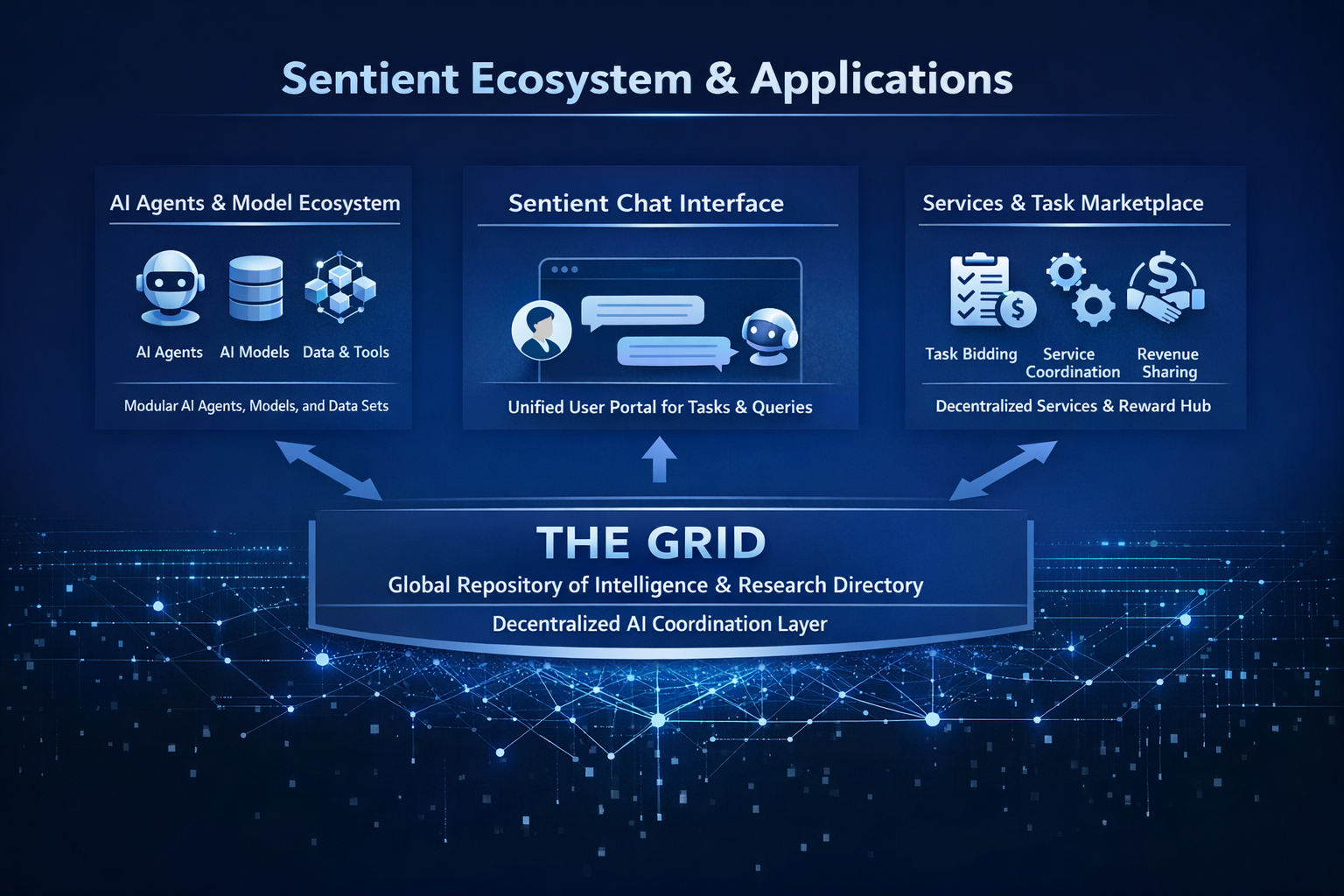
Sentient’s ecosystem is not limited to a single product. Instead, it is designed as an open platform that serves multiple layers, roles, and use cases.
AI Agents and Model Ecosystem
Sentient supports developers in contributing intelligent agents, foundation models, specialized tools, datasets, and more, with the protocol coordinating their collaboration to complete complex tasks. GRID is designed to achieve model composability, interoperability, and decentralized collaboration, rather than the closed, single-model outputs typical of traditional AI systems.
Application Entry Points Such as Sentient Chat
As a user-facing interaction layer, Sentient Chat provides a unified interface where end users can submit requests. Behind the scenes, the protocol automatically orchestrates different resources, agents, and data sources within GRID to generate responses. This is similar to composable calls to multiple intelligent services on a decentralized network.
Ecosystem Service Marketplace and Task Coordination
Within the Sentient ecosystem, task marketplaces and service coordination mechanisms will be established, allowing contributors to compete based on demand and quality, with revenue distributed through the protocol. This model resembles incentive mechanisms in DeFi, but extends them to AI development and usage.
Infrastructure and Data Systems Supporting the Sentient Network
Sentient’s infrastructure and data systems consist of a blockchain layer and an AI pipeline, which together ensure protocol transparency, traceability, and fair value distribution.
Blockchain System
The blockchain serves as the foundational trust layer of the Sentient protocol, recording ownership of AI artifacts, usage records, governance votes, and reward settlements. Through smart contracts, protocol rules are executed automatically, ensuring data immutability and transparent reward distribution.
AI Pipeline
The AI pipeline refers to the data curation, training, and recommendation systems, including:
- Data curation: community-driven selection and evaluation of training data
- Loyalty training: ensuring models align with community intent
- Call tracking and revenue sharing: transparent call paths that allow contributors to earn rewards based on actual usage
How Can Developers Build Applications in the Sentient Ecosystem?
Sentient aims to make ecosystem participation easy for developers, with the following key support pathways.
Artifact Development Support
Sentient defines a unified Artifact standard that allows developers to create intelligent agents, data services, and model components, and connect them to GRID as modular units. Once integrated, these Artifacts can be used by the protocol for task scheduling and collaborative decision-making.
Open APIs and SDKs
The protocol provides APIs and software development kits (SDKs) that allow developers to quickly integrate their services, participate in protocol orchestration, and earn usage-based revenue. This makes ecosystem development feel similar to a Web2 service marketplace, but with on-chain transparent settlement.
Community Contribution and Governance Participation
Developers can contribute beyond coding by participating in model evaluation, data governance, and other community activities. Through governance tokens or DAO voting mechanisms, developers collectively decide on key ecosystem parameters and roadmaps.
How Do Sentient’s Token Mechanism and Incentive Model Work?
To support an open economic system, Sentient introduces the SENT token as its native incentive and governance asset.
Token Issuance and Basic Parameters
SENT is the native token of the Sentient protocol, issued under the ERC-20 standard with a total supply of approximately 34.36**billion** tokens. It is primarily used for contributor incentives, governance voting, staking participation, and network revenue distribution.
Incentive Mechanisms
- Contribution incentives: developers who connect their Artifacts to GRID earn higher rewards as their usage increases
- Staking rewards: community members can stake on high-performing Artifacts to guide usage and share in generated revenue
- Governance voting: token holders participate in protocol parameter adjustments, reward pool allocation, and resource prioritization
Airdrops and Community Distribution
Sentient has launched phased airdrop programs that include early contributors and community members, helping to rapidly expand ecosystem participation and token decentralization.
How Do Community and Content Ecosystems Drive Project Growth?
Sentient’s growth depends heavily on community engagement and a thriving contributor ecosystem.
Community Building and Participation
Sentient encourages global developers, AI researchers, and data contributors to join the ecosystem through Discord, forums, hackathons, and other activities. This approach builds consensus and ensures protocol development is not controlled by a single company.
Ecosystem Incentives and Content Creation
Through airdrops, contribution rewards, and incentive programs, the project has attracted participants to write tutorials, build onboarding tools, and create use cases, lowering entry barriers for new users and continuously increasing ecosystem activity.
In addition, various independent media outlets and blockchain information platforms have published in-depth coverage of the Sentient ecosystem, helping to raise public awareness.
How Will the Sentient Ecosystem Expand and Evolve in the Future?
Over the coming years, Sentient is expected to evolve across several dimensions:
- Protocol iteration and governance maturity: as more AI agents and Artifacts join the network, the protocol will continue refining scheduling strategies and reward mechanisms to better support complex AI workloads
- Multichain and interoperability support: the ecosystem may expand to additional blockchains and cross-chain protocols, allowing GRID to operate beyond a single Layer 2 or mainnet and broadening the scope of AI collaboration
- Integration of Web3 and Web2 applications: as the ecosystem matures, Sentient’s protocol capabilities may be integrated into mainstream AI products, SaaS platforms, and professional services, accelerating real-world adoption of general intelligence services
Conclusion
Sentient is a decentralized, community-driven open-source AI protocol that aims to build a fair and transparent AGI ecosystem. By coordinating AI modules and intelligent agents through The GRID, leveraging blockchain-based governance and incentive mechanisms, and providing open developer tools, it enables participants to build, invoke, and share value on equal footing. As the ecosystem matures, Sentient has the potential to become a key piece of infrastructure at the intersection of Web3 and AI.
FAQ
Q1: How is Sentient different from traditional AI platforms? A1: Sentient uses decentralized protocols to allow contributors to share value, rather than relying on centralized companies to control models and data.
Q2: How can I participate in the Sentient ecosystem? A2: Users can develop Artifacts, contribute data, participate in community governance, or stake tokens to support incentive distribution.
Q3: What are the main uses of the SENT token? A3: It is used for contribution rewards, governance voting, and token staking to stimulate ecosystem activity.
Q4: Does Sentient involve risks? A4: Like any emerging protocol, Sentient carries technical, regulatory, and market risks. Participants should conduct their own risk assessments before getting involved.