Within the Web3 wallet space, token and points systems have become key tools for attracting users and scaling ecosystems. Rainbow is attempting to establish a long-term growth model through a combination of a points system and a potential token incentive framework.
Unlike traditional wallets, Rainbow emphasizes behavior-driven ecosystem growth. Actions such as swaps, cross-chain transfers, and asset holding may all serve as sources of points and rewards. This design ties user activity directly to ecosystem development, increasing usage while strengthening user retention.
As competition in the Web3 wallet sector intensifies, token-based incentives are becoming a major strategic direction. Rainbow token ecosystem and incentive structure are widely seen as central to its long-term growth plan.
Rainbow Token Mechanism
Rainbow plans to build a long-term incentive system through the issuance of an ecosystem token. According to available information, the total token supply is set at 1 billion, allocated across community incentives, ecosystem development, and team rewards.This structure is designed to support sustainable ecosystem growth while reducing centralized control risks.
In terms of allocation, Rainbow adopts a community-oriented approach. The treasury holds the largest share, primarily reserved for future ecosystem development and partnerships. This ensures long-term funding and supports ongoing incentive programs.
Additionally, a significant portion is allocated to airdrops and community incentives, reflecting a strong preference for community-driven growth. This distribution model is common among Web3 wallet projects and helps drive user acquisition and engagement.
Rainbow token allocation is as follows:
-
Total supply: 1 billion (1B)
-
Treasury: 47% (for long-term ecosystem development)
-
Airdrop: 15% (fully unlocked at TGE)
-
Future community incentives: 15% (user growth and trading rewards)
-
Team: 12.2% (typically subject to lock-up)
-
Investors: 7.8% (low VC allocation)
-
Public offering: 3% (public sale)
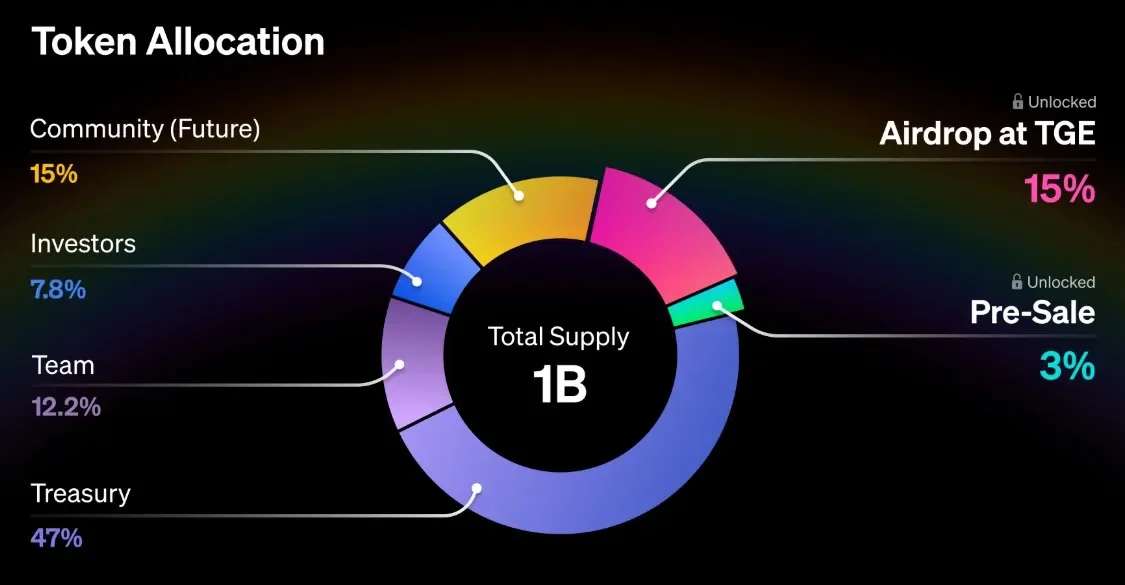
Rainbow’s high community and ecosystem allocation encourages greater participation and reduces centralization risk.
Rainbow Ecosystem Incentive Mechanism
Rainbow’s incentive model primarily revolves around user behavior. By rewarding on-chain activity, the platform can drive wallet usage and ecosystem growth.
For example, users performing token swaps or cross-chain operations may receive points or rewards. This mirrors growth strategies seen in consumer applications, where user actions are incentivized to increase engagement.
Rainbow may also introduce incentives through community events and partnerships, such as NFT campaigns or collaborative rewards. These diversified incentive methods help boost community participation.
As the ecosystem evolves, the incentive model may expand further, potentially including trading rewards or user tier systems. Such long-term mechanisms support sustained growth.
Potential Rewards and User Incentive Model
Rainbow’s user incentives are likely centered on wallet usage behavior. Actions such as swaps, bridging, or holding assets may generate points, reinforcing user activity.
The points system is widely considered a foundation for potential token distribution. Users accumulate points through ecosystem participation, which may later be converted into token rewards. This model is commonly seen across Web3 projects.
Rainbow may also incorporate NFT-based incentives and community engagement rewards. Participation in events or holding specific NFTs could unlock additional benefits, further enhancing user involvement.
Over time, the incentive structure may diversify, potentially including mechanisms such as trading mining or rewards for community contributions, supporting long-term ecosystem expansion.
Web3 Wallet Token Model Comparison
In the Web3 wallet sector, tokens are often used for governance and user incentives. For example, some wallets are expected to launch tokens, while others already use them to support ecosystem growth.
Compared to these models, Rainbow leans more toward a community-driven approach. Its relatively low investor allocation suggests a stronger reliance on community participation rather than institutional backing, which is less common in space.
Additionally, the large treasury allocation provides long-term funding for ecosystem development and user incentives.
Overall, Rainbow’s token model is more aligned with community and ecosystem growth.
Token Utility of Rainbow
Rainbow’s token is expected to serve multiple roles, including governance, user incentives, and ecosystem expansion.
First, governance is a key potential use case. Token holders may gain the right to vote on product updates, partnership directions, and incentive mechanisms. This approach supports decentralization and encourages community involvement.
Second, user incentives play a central role. Rainbow’s existing points system allows users to earn rewards through actions like swaps, bridging, or asset holding. These points may eventually convert into tokens, increasing engagement and retention.
Additionally, tokens may support ecosystem partnerships. Rainbow could collaborate with NFT projects or DeFi platforms, using token rewards to encourage participation and expand its ecosystem reach.
As the platform evolves, token utility may expand further, potentially including gas subsidies, on-chain identity systems, or Web3 membership benefits. This multi-functional design could help transform Rainbow from a wallet into a broader Web3 platform.
Likelihood of Token Issuance
The likelihood of Rainbow launching a token is closely tied to competition in the Web3 wallet space. As wallets become key entry points for users, token incentives are increasingly used to attract and retain them.
Rainbow’s introduction of a points system is often seen as a precursor to token issuance. In many Web3 projects, users earn points through on-chain activity, which may later convert into token rewards. This strengthens market expectations of a future token.
Its user growth strategy also supports this direction. By incentivizing trading activity and asset holding, Rainbow can increase engagement and expand its user base. Combined with token incentives, this can create strong network effects.
From the allocation structure, the high percentage dedicated to treasury and community further signals a community-first approach. This aligns with long-term growth and governance strategies.
However, token issuance still depends on the project’s development stage and market conditions. Rainbow may choose to launch a token only after reaching sufficient scale or ecosystem maturity, meaning the exact timing remains uncertain.
Risks and Considerations of Rainbow Tokens
Despite its potential appeal, Rainbow’s token model comes with risks.
First, airdrop unlocks may introduce market volatility. For example, if 15% of tokens are fully unlocked at TGE, this could create short-term selling pressure, a common scenario in Web3 projects.
Second, token issuance itself is not guaranteed. While the points system suggests potential future rewards, there is no certainty of a token launch or airdrop. Users who rely solely on these expectations may face risks.
Users should also be cautious of unofficial tokens. Before any official release, counterfeit tokens or fraudulent projects may appear, exploiting airdrop speculation and posing security threats. Always rely on official sources.
Additionally, the token distribution structure can impact market performance. Unlocking schedules for airdrops and public sales may increase short-term volatility, while team and investor vesting affects long-term stability. These factors should be considered holistically.
Conclusion
Rainbow’s token ecosystem centers on community incentives and user growth. Through its points system and potential token model, it aims to expand its ecosystem and strengthen engagement.
The high allocation to community and treasury reflects a strong emphasis on decentralized, community-driven development while reducing centralization risks. This approach supports a sustainable, long-term incentive framework.
As competition in the Web3 wallet sector intensifies, token incentives are becoming a key growth strategy. Rainbow’s combination of points and potential token rewards positions it to enhance user retention and scale its ecosystem. Over time, its token mechanism may play an increasingly important role in its overall development.
FAQ
- Has Rainbow issued a token?
Rainbow has not officially issued a token yet, but it has launched a credit system. The market expects future token or airdrop plans, pending official announcements.
- What are Rainbow tokens used for?
Rainbow tokens may support community governance, user rewards, and ecosystem partnerships, helping drive wallet ecosystem growth and user engagement.
- Is Rainbow likely to conduct an airdrop?
Rainbow’s credit system allows users to earn credits through wallet usage, which is widely regarded as a reference for potential airdrops.
- Are there risks with Rainbow tokens?
Token issuance is uncertain, and airdrop unlocks may cause market volatility. Users should rely on official information and participate prudently.