ETH's Capital Hub Status Is Recovering, but Has Not Yet Entered a Strong Cycle
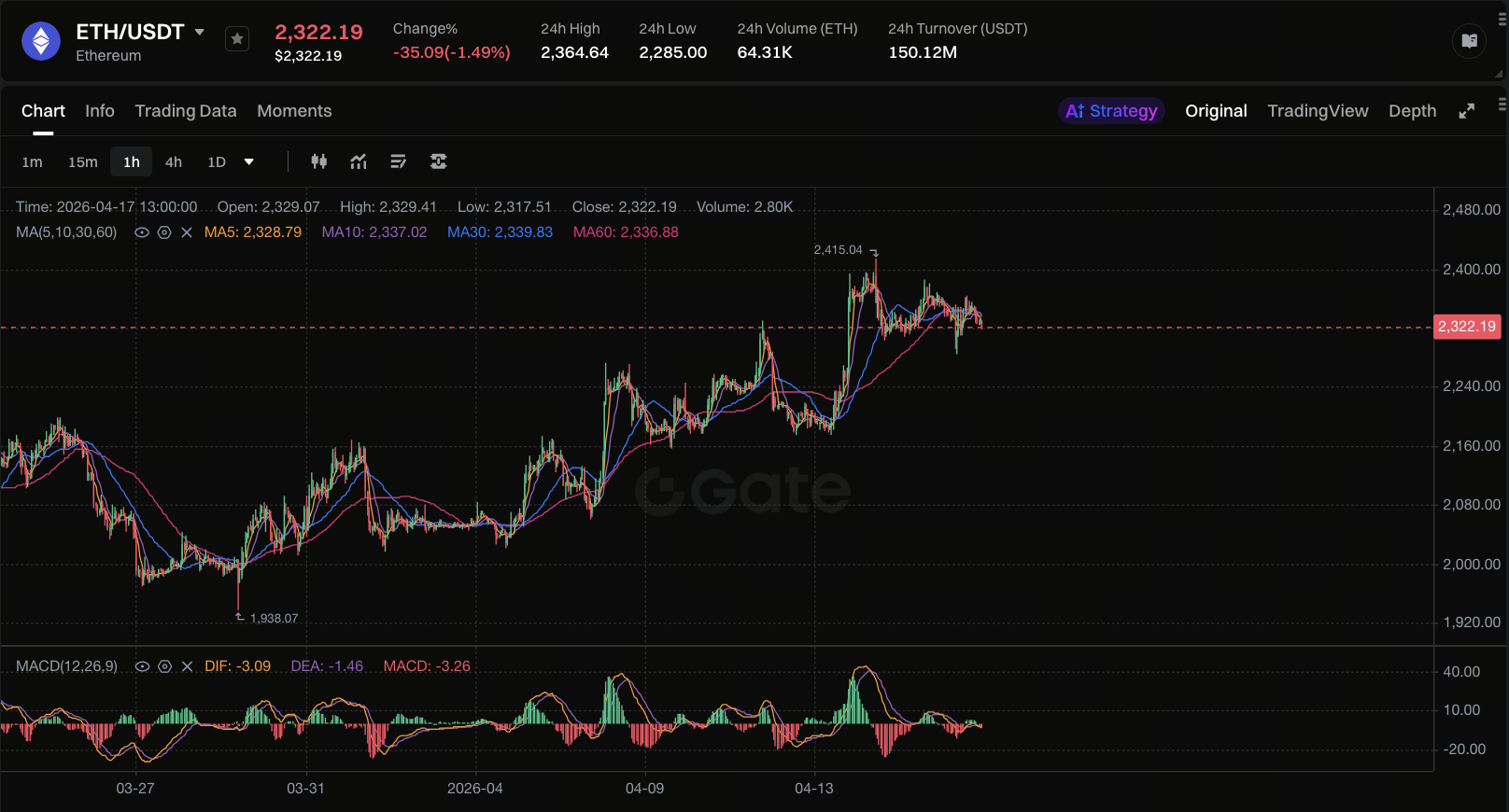
Image source: Gate Marketplace Page
ETH is not just experiencing a simple rebound, nor is it in a fully strong market cycle yet; it's more accurately in a "reconstruction phase of its capital hub function."
In other words, ETH is once again serving as a bridge for capital to flow from BTC into risk assets, but this process is still unstable, and the marketplace is actively testing its sustainability.
What’s Driving ETH’s Recent Rally
Recent market trends reveal three important signals for ETH:
-
Price: ETH’s recent rise % and elasticity have improved, and investor focus has shifted from “has the decline stopped” to “can ETH continue to outperform.”
-
Capital: Public reports indicate signs of renewed ETH ETF inflows, while BTC capital has shown divergence at times—often a precursor to sector rotation.
-
Activity: On-chain trade activity has rebounded, suggesting that risk appetite is moving from “protecting only core assets” to “seeking efficient assets.”
However, increased activity does not automatically translate to increased value. Data also shows that on-chain transfer volume and trading fee quality have not fully improved in tandem, meaning "momentum is back, but quality still needs confirmation."
Why ETH Is a “Capital Hub” Rather Than Just the “Second Largest Token”
Many view ETH as a “high Beta mainstream token,” but its more critical role is as a “capital transfer hub.”
Three key reasons explain this:
-
Balanced asset attributes: ETH’s risk-return profile sits between BTC and altcoins, making it naturally suited for capital to migrate across risk layers.
-
Robust application layer: Whether it’s DeFi, stablecoin settlement, RWA, or L2 expansion, the ETH ecosystem can support incremental trades and strategic demand.
-
Greater institutional accessibility: Compared to long-tail assets, ETH offers superior liquidity, compliance visibility, and derivative depth, making it easier for institutions to integrate into their frameworks.
As a result, in most market cycles, the typical path is: capital enters BTC first, then ETH, and finally spreads to high Beta assets.
Core Drivers and Key Obstacles in This Recovery
Core Drivers
-
Driver 1: Capital redistribution after BTC’s high-level consolidation. When BTC stops accelerating in one direction, risk budgets typically seek the next tier of liquid assets, with ETH often being the first destination.
-
Driver 2: Shifts in institutional capital structure. As ETFs and institutional product lines expand, ETH’s likelihood of incremental allocation increases.
-
Driver 3: Ecosystem activity recovery. Increased trading, protocol activity, and narrative density enhance ETH’s valuation flexibility as the “ecosystem anchor asset.”
Key Obstacles
-
Obstacle 1: On-chain “volume up, value stagnant” risk. If increased activity doesn’t translate into trading fee growth, TVL quality, and genuine capital accumulation, ETH’s market performance may weaken.
-
Obstacle 2: Diversion to alternative public chains. Some high-risk capital will still be drawn to highly elastic chains and thematic assets.
-
Obstacle 3: Overall risk appetite remains unstable. Current macro and derivatives sentiment are not fully bullish, and ETH may still be affected by a shrinking overall risk budget.
How to Distinguish Between a Short-Term Rebound and a Mid-Term Shift
You can use these five signals—no complex models required:
-
Is ETH/BTC consistently strengthening: Ignore single-day spikes; look for at least 1–2 weeks of stable relative strength.
-
Is the ETH ETF seeing sustained net inflows: Consistency matters more than isolated large inflows.
-
Is on-chain activity accompanied by value accumulation: Focus on trading fee quality, stablecoin settlement quality, and net inflows to core protocols—not just the number of trades.
-
Is BTC.D gently declining: If BTC’s market share falls and the marketplace remains stable, it generally favors ETH’s hub role.
-
Are high Beta assets “rising with, not ahead of, ETH”: If altcoins overheat before ETH, it may signal the end of the short-term cycle.
Practical Insights for Trading and Allocation
At this stage, the most effective approach isn’t to “make an absolute call,” but instead to respond in layers:
-
Timing: Treat ETH as the “risk diffusion confirmation layer,” rather than chasing the hottest small tokens immediately.
-
Structure: Prioritize assets with deep liquidity and strong capital absorption, and avoid emotional buying at highs.
-
Risk control: If “ETH weakens + BTC weakens + risk assets drop further,” quickly reduce risk exposure.
When ETH recovers, market opportunities typically spread; when ETH fails to recover, market risk usually propagates.
Conclusion
ETH’s status as a capital hub is recovering, but confirmation is still needed. The next critical step isn’t another sharp rally—it’s whether capital will stay consistently. Only when relative strength, capital inflows, and on-chain value align will ETH move from “phase recovery” to “mid-term leadership.”







