In the early days of decentralized finance, or DeFi, on-chain financial activity was centered mainly on crypto-native assets such as ETH and stablecoins. However, these assets are often highly volatile, which makes the broader system vulnerable to concentrated risk during sharp market swings. As a result, bringing real world assets, or RWAs, on-chain has become one of the key directions in DeFi’s evolution.
Within this trend, gold has long been regarded as one of the most representative RWA assets because of its enduring value stability. It is in this context that GoldFinger brings gold on-chain through tokenization, allowing it to do more than simply preserve value. It can also participate in lending, trading, and yield strategies, giving gold a more foundational financial role within the DeFi ecosystem.
GoldFinger’s Position in DeFi: How Gold Becomes on-chain Financial Infrastructure
GoldFinger’s core positioning is to transform gold from a passive store of value into an on-chain asset that can actively participate in financial activity. This shift means gold is no longer limited to serving as a price anchor, but can instead become a foundational asset used across a wide range of DeFi operations.
Within the on-chain ecosystem, gold assets, represented by ART, can be used much like stablecoins or major crypto assets for collateral, trading, or strategy construction. This gives them a role increasingly close to that of a base asset layer, similar to government bonds or high credit quality assets in traditional finance, where they serve as stabilizers and anchors of value within the system.
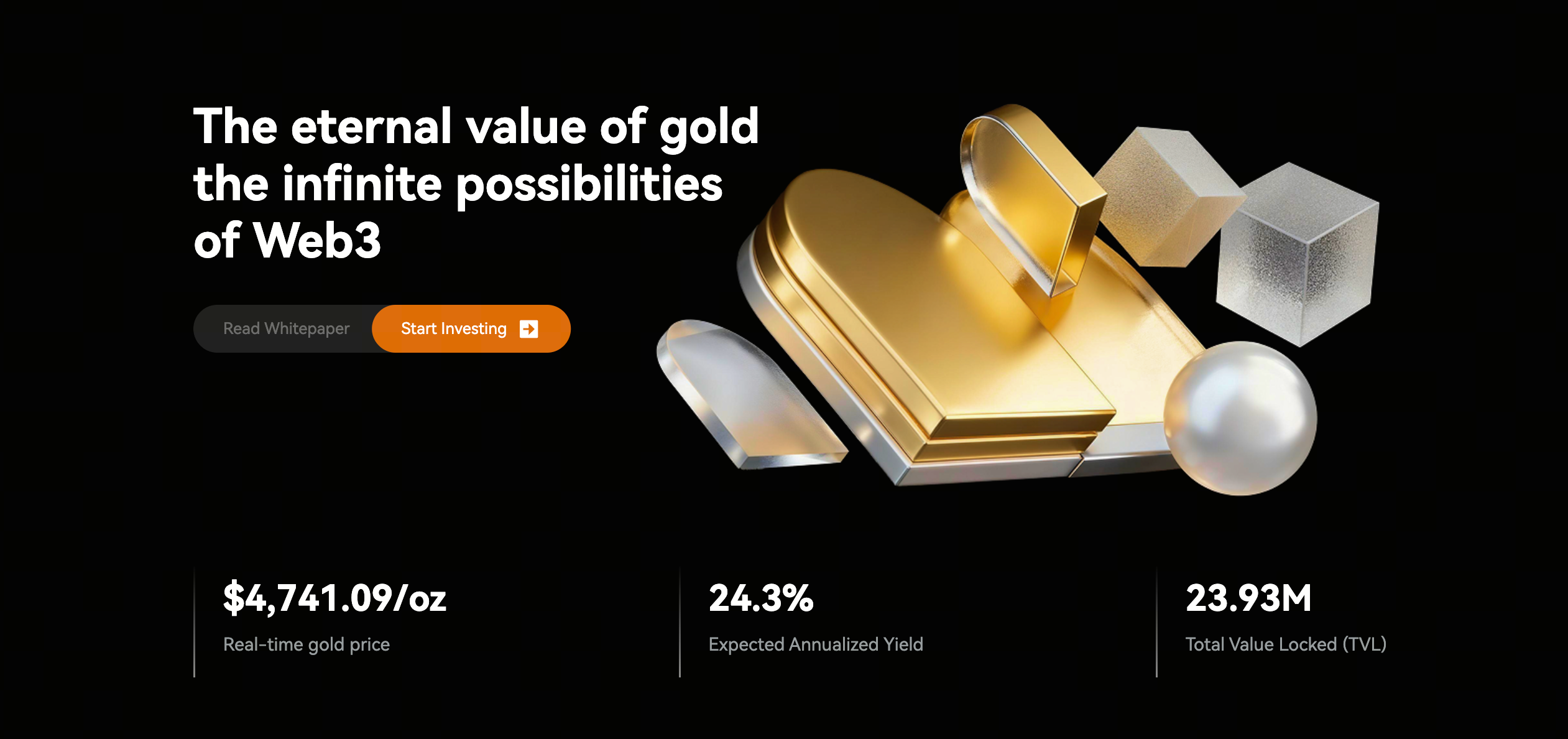
The on-chain Path for Gold Assets: The Mapping Mechanism from Physical Gold to on-chain Tokens
Before gold can enter DeFi, it must first be mapped from a real world asset into an on-chain asset. Through asset custody and smart contracts, GoldFinger converts physical gold or related assets into on-chain tokens, represented by ART.
At its core, this process is a digital expression of asset ownership or income rights, making them transferable and tradable on a blockchain. Once the mapping is complete, gold assets are no longer constrained by their physical form and can be moved quickly and traded in fractional amounts on-chain.
This mapping mechanism is the foundation that allows gold to enter the DeFi system and participate in a wide range of financial activities.
Reserve and Custody Framework: How the Authenticity and Verifiability of Gold Assets Are Ensured
Because on-chain users cannot directly access the underlying assets, GoldFinger must rely on custody and compliance frameworks to ensure that the gold genuinely exists. In most cases, the gold is held by professional custodians, with legal structures in place to clearly define ownership and rights.
The key to this framework is establishing a trusted connection between offchain assets and on-chain tokens. Only when custody is secure and information is transparent can the on-chain asset have a real value foundation and gain acceptance within DeFi systems.
Proof of Reserve Mechanism: How Transparency for on-chain Gold Is Achieved
To strengthen system transparency, GoldFinger introduces a Proof of Reserve mechanism to verify whether on-chain tokens are fully backed by sufficient assets.
This mechanism generally combines audit reports with on-chain data, allowing users to independently verify reserve conditions. Through ongoing disclosure of asset information, the system can reduce trust costs and improve the acceptance of gold assets within DeFi.
For RWA projects, this level of transparency is a key condition for integrating into an open financial system.
GoldFinger’s Use in DeFi Lending Markets (Collateral and Borrowing)
In lending markets, gold tokens can be used as collateral. Because their price volatility is relatively lower than that of many crypto assets, they are better suited to serve as more stable collateral in lending protocols.
When users deposit ART as collateral into a lending platform, they can borrow stablecoins or other digital assets against it. This model allows gold to do more than preserve value, it can also unlock liquidity and improve capital efficiency.
At the same time, for lending systems, the inclusion of gold assets helps diversify risk and reduce dependence on highly volatile assets.
The Role of Gold Assets in Stable Yield Strategies (Yield Enhancement and Defensive Allocation)
In DeFi yield strategies, gold assets are often used as a layer of risk buffering. Their relative price stability can reduce overall portfolio volatility while allowing them to serve as value supporting assets within yield strategies.
For example, in some strategies, gold assets can be combined with stablecoins or other assets to build a more balanced return structure. This approach resembles portfolio management in traditional finance, where assets with different risk characteristics are combined to strike a balance between return and risk.
How GoldFinger Is Used in Decentralized Trading and Liquidity Pools (DEX / AMM)
On decentralized exchanges, or DEXs, gold tokens can participate in liquidity pools as part of a trading pair. For example, ART can be paired with stablecoins or major crypto assets to provide market depth.
By supplying assets to these pools, liquidity providers can earn trading fees or other incentives. This mechanism allows gold assets to take part in price discovery and form on-chain liquidity.
Compared with the traditional gold market, this type of on-chain liquidity is more open and more accessible.
How Gold Assets Participate in Yield Strategies (Yield Strategies / Portfolio Management)
In more complex DeFi strategies, gold assets can serve as base assets within multi-layer structures. For example, users can deposit ART into a lending protocol, then deploy the borrowed assets into other yield strategies, creating a combined return path.
This kind of asset reuse is one of DeFi’s defining characteristics. Through layered strategies, gold assets can retain their value preserving properties while also taking part in yield generation.
This model turns gold from a standalone asset into a component that can be embedded within more sophisticated financial structures.
GoldFinger’s Potential Use in Structured Financial Products (Synthetic Assets / Derivatives)
As DeFi continues to develop, gold assets may also be used to build more complex financial products. For example, synthetic assets or derivatives based on the price of gold can give users different forms of market exposure.
Within these structures, gold can serve either as the underlying asset or as collateral in product design. This broadens gold’s role within the on-chain financial system and expands the boundaries of its utility.
How GoldFinger Improves DeFi’s Resistance to Volatility and Risk Hedging Capacity
At the system level, introducing gold assets can help improve DeFi’s overall stability. Because gold prices usually have a lower correlation with some crypto assets, adding gold can reduce total system volatility.
In addition, during periods of heightened market uncertainty, gold is often seen as a safe haven asset. This characteristic allows it to play the role of a risk hedging tool within the on-chain financial system, strengthening the resilience of the broader ecosystem.
Conclusion
By bringing gold assets onto the blockchain, GoldFinger transforms gold from a traditional store of value into a foundational asset that can participate in DeFi. Through tokenization, Proof of Reserve, and on-chain circulation mechanisms, gold can be used across lending, trading, and yield strategies.
This model not only expands the use cases for gold, but also provides DeFi with a more stable asset foundation, helping drive the on-chain financial system toward greater diversity and maturity.
FAQs
What can GoldFinger’s gold assets be used for?
They can be used for collateralized lending, liquidity provision, and participation in yield strategies.
Why is gold suitable for DeFi?
Because of its long term stability and lower volatility, which help reduce system wide risk.
In what scenarios can ART be used?
These include lending protocols, DEX trading pairs, and portfolio based strategies.
Can gold assets generate yield?
In some structures, gold assets can participate in yield strategies and generate returns.
What is the difference between GoldFinger and traditional gold investing?
The core difference lies in on-chain composability and liquidity.
What is the greatest value of gold assets in DeFi?
They provide stability and can serve as foundational assets across a variety of financial activities.







