EU Cash Ban Hits Crypto Markets: The Future of Digital Payments Through New AML Rules

Beginner
Quick Reads
Last Updated 2026-03-27 21:41:00
Reading Time: 1m
The European Union's new AML cash payment ban is set to take effect, limiting cash transactions over €10,000. This article explores the potential implications for the cryptocurrency, stablecoin, and Web3 payments ecosystem.

EU AML Regulation Brief

In 2025, the Council of the European Union enacted the latest Anti-Money Laundering (AML) regulation—the EU AML Cash Ban Regulations—standardizing a ban on cash payments exceeding €10,000. Any merchant, institution, or individual making a cash transaction above this threshold must use a bank or a licensed payment channel. Additionally, the EU will establish a new supervisory agency—the Anti-Money Laundering Authority (AMLA)—which is set to be fully operational in 2026 and will provide unified oversight of cross-border payments and Virtual Asset Service Providers (VASPs).

This marks a shift to stricter oversight for both anonymous cash transactions and certain anonymous crypto payments.

Why Restrict Cash Payments?

The EU’s objective is to curb money laundering, tax evasion, and terrorist financing. Cash, lacking traceability, has long been a key tool for money laundering. The European Commission argues that large cash transactions often conceal illicit funds, while electronic payments provide an auditable trail.

However, critics say this policy indirectly pushes toward a “cashless society.” Some privacy advocates contend it will force the public to rely on centralized banks and may undermine individual financial autonomy.

The Regulatory Line Between Crypto and Cash

As cash restrictions tighten, the market is naturally focusing more on crypto assets. The EU distinguishes two primary categories from a regulatory perspective:

  • Regulated crypto assets (e.g., stablecoins, assets on licensed exchanges)
  • Privacy coins and unregistered wallet transactions (e.g., Monero, Zcash, etc.)

The new AML framework explicitly requires exchanges and wallet service providers to enforce KYC (Know Your Customer) and suspicious transaction reporting. This substantially raises the bar for anonymous transfers.

At the same time, blockchain’s traceability has led some regulators to conclude that compliant crypto transactions may be even safer than cash.

Can Stablecoins Serve as a “Legitimate Alternative”?
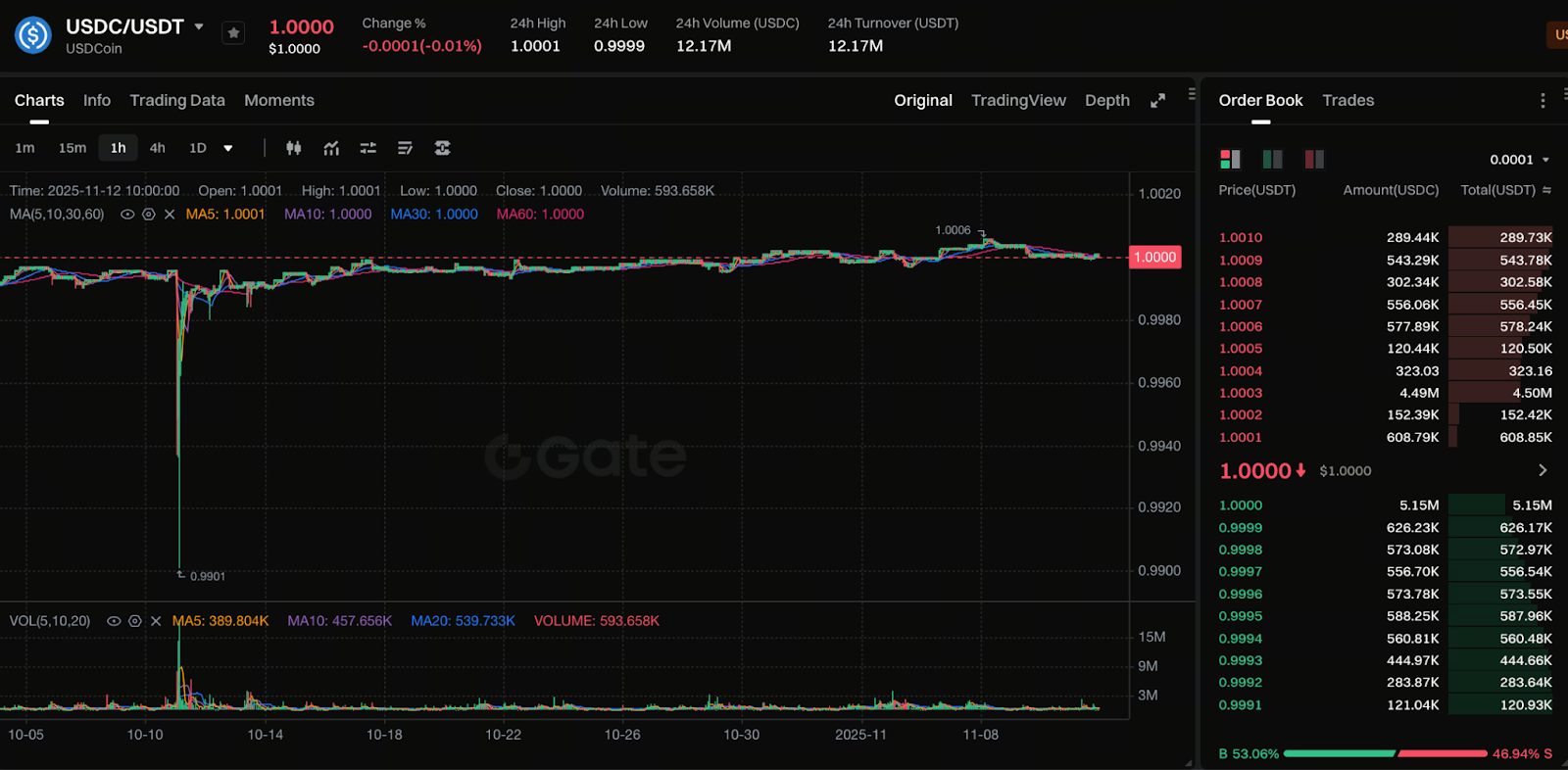

Figure: https://www.gate.com/trade/USDC_USDT

With cash increasingly restricted, stablecoins are poised to benefit. Under the EU’s MiCA (Markets in Crypto-Assets) regulatory framework, stablecoin issuers that secure licenses can legally facilitate cross-border payments and merchant settlements.

For example:

  • USDT / USDC may gain partial payment status within the EU;
  • The EU is also advancing euro-pegged stablecoins like EUROe and Circle EURC.

As a result, future purchases in countries such as France or Germany may be conducted through compliant Web3 wallets instead of with cash.

Impacts on Investors and Project Teams

  • For crypto investors: As AML rules tighten, privacy coins and non-KYC platforms will face higher risks, while compliant exchanges and stablecoins will achieve greater legal recognition.
  • For Web3 project teams: Decentralized payment projects (such as DeFi payment gateways and on-chain settlement systems) that pass AML compliance reviews may become the backbone of mainstream payments.
  • For traditional businesses: Cross-border e-commerce and service firms will need to roll out “compliant crypto payment” options or risk exclusion from the EU regulatory regime.

Conclusion

The EU AML Cash Ban Regulations do more than just restrict cash—they establish a new framework for digital payments and the crypto ecosystem. As cash transactions become less common, both users and enterprises will seek out more convenient and secure digital payment methods. This creates regulatory opportunities for stablecoins, on-chain payments, and Web3 financial infrastructure, while raising the bar for project compliance.

In the next several years, the EU will be a proving ground for the convergence of crypto compliance and traditional finance. For investors, understanding regulatory trends and embracing a more transparent blockchain world will be the real “new opportunity in the anti-money laundering era.”

Author: Max
Disclaimer
* The information is not intended to be and does not constitute financial advice or any other recommendation of any sort offered or endorsed by Gate.
* This article may not be reproduced, transmitted or copied without referencing Gate. Contravention is an infringement of Copyright Act and may be subject to legal action.

Related Articles

What is Fartcoin? All You Need to Know About FARTCOIN
Intermediate

What is Fartcoin? All You Need to Know About FARTCOIN

Fartcoin (FARTCOIN) is a representative meme coin within the Solana ecosystem based on an AI-driven narrative. Its core concept originated from an experiment aimed at exploring the "boundaries between AI Agents and humor." More than just a digital asset with social attributes, the project deeply couples absurd humor culture with on-chain financial logic by integrating autonomous AI interaction models.
2026-04-04 22:01:19
Gold Price Forecast for the Next Five Years: 2026–2030 Trend Outlook and Investment Implications, Could It Reach $6,000?
Beginner

Gold Price Forecast for the Next Five Years: 2026–2030 Trend Outlook and Investment Implications, Could It Reach $6,000?

Analyze current gold price trends alongside authoritative five-year forecasts, integrating an evaluation of market risks and opportunities. This gives investors insight into the potential trajectory of gold prices and the main drivers expected to shape the market over the next five years.
2026-03-25 18:13:30
Aster vs Hyperliquid: Which Perp DEX Will Prevail?
Beginner

Aster vs Hyperliquid: Which Perp DEX Will Prevail?

Aster and Hyperliquid are the two representative protocols of the "purpose-built L1 path" within the current decentralized perpetual exchange (Perp DEX) sector. As a pioneer in the field, Hyperliquid has built a deep liquidity moat through its highly mature order book architecture and strong community consensus. Conversely, Aster, as a rising challenger, seeks to leapfrog the competition in high-performance trading through more aggressive multi-chain aggregation logic, private transaction modules, and an underlying execution environment optimized for 2026 market demands.
2026-03-24 11:58:33
AI-Native Settlement Layers: How United Stables Is Building the Next Financial Rail
Beginner

AI-Native Settlement Layers: How United Stables Is Building the Next Financial Rail

Stablecoins were originally designed as dollar substitutes within exchanges, primarily used for asset pricing and trade settlement. As on-chain financial ecosystems have matured, their role has expanded beyond simple payments to include collateral assets, cross-chain liquidity mediums, and unified settlement units. In particular, as AI systems and automated agents begin to participate directly in economic activity, demand has risen sharply for programmable value units capable of instant settlement. This shift is pushing stablecoins toward the role of foundational financial infrastructure.
2026-03-25 03:16:17
Aerodrome Tokenomics: How ve(3,3) Powers Base's Most Profitable DEX
Beginner

Aerodrome Tokenomics: How ve(3,3) Powers Base's Most Profitable DEX

AERO is the native token of Aerodrome Finance, a core decentralized exchange and liquidity protocol in the Base ecosystem. It is primarily used for liquidity incentives and ecosystem operations. veAERO is a governance NFT that users receive by locking AERO, representing both voting power and the right to share protocol revenue. Through a dual track structure of AERO as a utility token and veAERO as a governance credential, Aerodrome separates liquidity usage value from long term governance power, allowing participants to act as liquidity providers, governance decision makers, and revenue sharers within the same system.
2026-03-25 06:40:31
Hybrid Collateral Stablecoins: Inside United Stables' Stability and Yield Architecture
Beginner

Hybrid Collateral Stablecoins: Inside United Stables' Stability and Yield Architecture

In the early stages of the crypto market, traditional stablecoins mainly relied on single-reserve or single-collateral models. Their primary focus was price stability and payment convenience, which allowed them to become foundational tools for on-chain trading and capital flows. As the market has entered a more mature financial phase, however, this structure has begun to reveal limitations, including high concentration risk and the difficulty of balancing liquidity with yield. These constraints have driven the evolution toward multi-layer collateral and portfolio-based designs, such as the dual-layer hybrid collateral architecture proposed by United Stables, which seeks to redefine the underlying logic of stable assets.
2026-03-25 03:17:39





