As blockchain technology has evolved from a simple value transfer tool into a robust digital asset infrastructure, ENJ has been leveraged to build more sophisticated asset systems. This enables digital items to be defined, owned, and utilized across multiple on-chain environments.
In legacy digital systems, game items and virtual assets are typically tied to a single platform, lacking true ownership and interoperability. Blockchain’s arrival allows these assets to be verified and recorded on-chain, while ENJ’s mechanisms further address the challenge of establishing a value structure for assets.
From a holistic architecture standpoint, ENJ is not merely a transactional medium. It is a fundamental component in asset creation, management, and lifecycle operations. Understanding ENJ’s role provides clarity on how blockchain supports diverse digital asset types and enables consistent, composable assets across applications.
What Is ENJ and Why Is It More Than Just a Token
ENJ’s design moves beyond the traditional token use case of transfers or payments; it functions as a utility token deeply integrated with digital assets.
In most blockchain systems, tokens facilitate value exchange or cover network fees. ENJ, however, is embedded in asset creation and structure design, making it an integral part of the asset ecosystem. This means ENJ operates not just at the transactional layer, but also in constructing the asset layer.
ENJ is thus best described as an “asset-backed token.” Its value stems both from market circulation and its structural function within the digital asset system. This distinguishes ENJ from standard payment or single-purpose tokens.
ENJ’s Foundational Role in the Enjin Ecosystem
Within the Enjin ecosystem, ENJ acts as the core bridge between assets and the platform.
ENJ is central to the creation of digital assets, linking them to tokens at inception. This association gives assets foundational structure, transforming them from mere data records into entities with value logic.
ENJ also connects various ecosystem modules—asset issuance, management, and utilization—enabling seamless functionality within a unified framework. In addition, ENJ powers incentive mechanisms, rewarding participants through tokens and ensuring sustainable system operations.
This “connective layer” makes ENJ a pivotal element in the digital asset ecosystem.
How ENJ Integrates with Digital Assets
ENJ’s relationship with digital assets is defined by its involvement in asset creation and value structure design.
In Enjin’s system, digital assets can be minted with a designated amount of ENJ. This linkage provides “value anchoring,” so assets are not only unique on-chain records but are also tied to the token infrastructure.
The key shift here is that assets gain independent on-chain attributes and maintain logical consistency across scenarios, enhancing their transferability.
ENJ forms the “support layer” of the digital asset ecosystem, while individual assets comprise the “presentation layer.” Together, they create a comprehensive structure.
ENJ’s Role Across the Asset Lifecycle
ENJ is embedded throughout the digital asset lifecycle, establishing a closed-loop ecosystem.
In the creation phase, ENJ facilitates asset generation, providing core structure. During the holding phase, assets are user-managed via on-chain addresses, with ownership recorded on blockchain and ENJ underpinning the asset. In the circulation phase, assets move between users and applications, with ENJ ensuring cross-context consistency. When assets are destroyed, their associated ENJ can re-enter the system, forming a cyclical relationship.
This lifecycle integration positions ENJ as a persistent asset system component—not just a utility tool.
ENJ and Ecosystem Use Cases
ENJ’s functionality is realized through practical use cases, closely tied to the way digital assets are deployed.
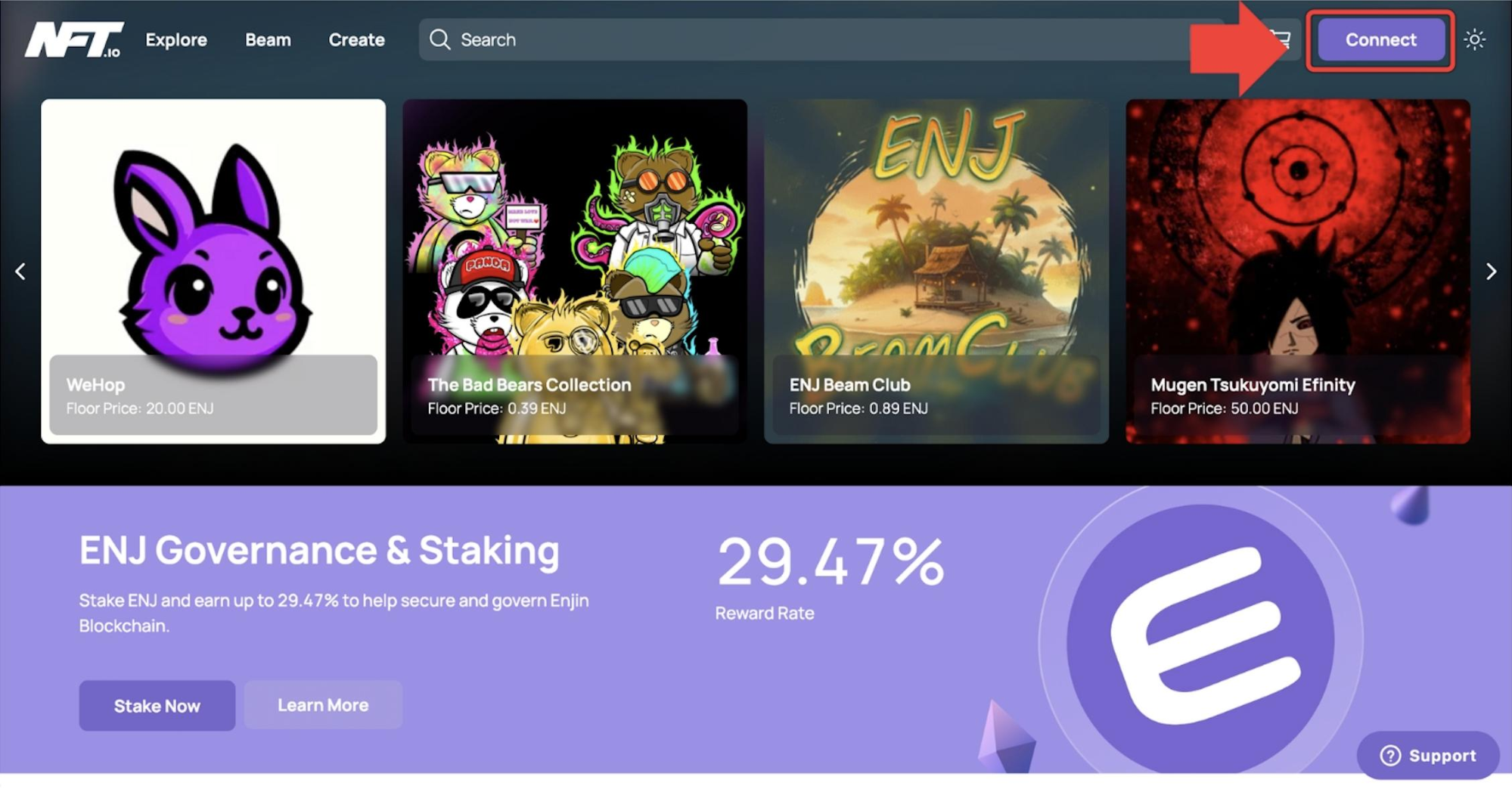
In blockchain gaming, ENJ facilitates the creation of game items, granting on-chain ownership and transferability. For digital collectibles, ENJ enables the issuance of unique assets with clear ownership.
ENJ is also instrumental in broader digital rights scenarios, such as membership credentials or virtual asset management, supporting verifiable asset systems. These examples illustrate ENJ’s versatility across digital asset applications.
Structurally, ENJ provides the foundational layer, while specific applications form the user-facing environment, together shaping a complete ecosystem.
ENJ’s Functional Boundaries
Despite ENJ’s critical role in the digital asset system, its functionality has distinct boundaries.
ENJ itself is not a digital asset and does not directly represent any specific asset. Its purpose is to support asset creation and structural design, not to substitute the asset.
ENJ’s utility is contingent upon ecosystem and application context. Without concrete use cases, ENJ’s function within the asset system cannot be realized. This underscores ENJ’s position in the infrastructure layer, with its value and application dependent on higher-level integrations.
Recognizing these boundaries helps differentiate between “token mechanisms” and “asset forms,” preventing conceptual confusion.
ENJ’s Core Functional Structure (Comparison Table)
To illustrate the design differences between ERC-1155 and ERC-721, compare asset structure, contract models, and operational efficiency across several dimensions. These variations impact development practices and determine the suitability of each standard for specific applications.
| Functional Dimension |
ENJ’s Role |
Asset System Manifestation |
| Asset Creation Support |
Drives asset generation |
Digital assets are defined and issued |
| Value Structure Construction |
Provides value logic |
Assets possess structural value |
| Lifecycle Participation |
Embedded in creation, holding, and transfer |
Assets complete the full lifecycle |
| Ecosystem Connection |
Links applications and scenarios |
Assets are interoperable across systems |
| Incentive Mechanism Support |
Sustains ecosystem operations |
Participants receive rewards |
The table shows ENJ’s functionality extends across asset creation, value structure, and ecosystem connectivity. This multidimensional approach enables ENJ to serve as foundational infrastructure, not simply a transactional tool.
Summary
Enjin Coin (ENJ) serves as structural support and value foundation for digital assets within blockchain environments. By participating in asset creation, binding, and lifecycle management, ENJ is a critical mechanism linking the asset layer to the application layer.
The core value of ENJ lies in building a scalable digital asset ecosystem, empowering diverse asset types to be created, managed, and circulated within a unified structure. Understanding ENJ’s functionality gives a comprehensive perspective on blockchain’s applications in the digital asset domain.
FAQ
What is ENJ’s main function?
ENJ supports the creation, management, and value structure design of digital assets.
Is ENJ the same as an NFT?
No. NFTs are asset forms, while ENJ is the token powering asset mechanisms.
How does ENJ participate in asset creation?
ENJ is integrated into asset design during the creation process.
Is ENJ only used in gaming?
ENJ originated in gaming but is applicable across a broad range of digital asset scenarios.
Does ENJ’s function rely on applications?
Yes. ENJ's utility must be realized within specific ecosystems and applications.