Bitcoin Price Prediction: Miners' Debt Surges 505%! AI Transformation Could Emerge as the Market's Next Support

Last Updated 2026-03-28 04:59:32
Reading Time: 1m
The difficulties of traditional financing have increased debt leverage among miners, prompting a growing number of mining companies to raise capital through the bond and convertible note markets.

Bitcoin Miner Debt Surges

According to the latest report from investment giant VanEck, over the past 12 months, the total debt held by Bitcoin miners has skyrocketed from $2.1 billion to $12.7 billion—a year-over-year increase exceeding 505%. This surge highlights how miners, facing the AI boom and intensifying competition in Bitcoin production, are rapidly ramping up capital expenditures to maintain their share of global hash rate.

VanEck analyst Nathan Frankovitz and Head of Digital Assets Research Matthew Sigel emphasize that miners who fail to continually invest in new hardware will see their global hash rate share steadily decline, resulting in reduced daily BTC rewards. They describe this phenomenon as the "Melting Ice Cube Problem": without ongoing investment in equipment upgrades, miners’ revenues will quickly melt away like an ice cube.

Traditional Financing Challenges Drive Debt Leverage Higher

Historically, miners primarily relied on equity markets for funding. However, given Bitcoin’s extreme price volatility and unpredictable returns, the cost of equity capital often exceeds that of debt. As a result, a growing number of mining companies are turning to bond and convertible note markets to raise capital.

According to data from The Miner Mag, the combined total of debt and convertible bonds for 15 publicly listed miners reached $4.6 billion in Q4 2024, with an additional $1.5 billion in new issuances by Q2 2025.

AI and HPC Emerge as New Cash Flow Sources for Miners

Following the Bitcoin block reward halving in April 2024 (reducing rewards to 3.125 BTC), miner profit margins have been significantly compressed. Consequently, some mining firms have begun redirecting energy capacity toward AI (Artificial Intelligence) and HPC (High Performance Computing) hosting services in pursuit of stable, predictable cash flows. These long-term fixed contract revenues enable miners to further expand debt financing, lower overall capital costs, and reduce reliance on Bitcoin’s price cycles.

For example:

  • Bitfarms completed $588 million in convertible bond financing to build out AI and HPC infrastructure in North America.

  • TeraWulf announced a $3.2 billion senior secured note issuance to expand its Lake Mariner data center in New York.

  • IREN completed a $1 billion convertible bond offering in October, with a portion of proceeds allocated to general operations and expansion.

AI Integration Will Not Weaken the Bitcoin Network

Some worry that miners shifting to AI computing could undermine Bitcoin network security, but VanEck analysts argue the opposite. They note that AI’s high electricity demand actually spurs upgrades to energy infrastructure, which in turn strengthens the foundation of Bitcoin mining operations. Additionally, AI inference workloads fluctuate cyclically throughout the day, enabling miners to flexibly allocate both hash rate and energy resources for optimal efficiency.

Miners Seek to Balance Energy Efficiency and Cost

Some miners are exploring ways to reinvest surplus electricity into Bitcoin mining during periods of low AI demand, thereby boosting energy utilization rates. This strategy not only helps offset the high standby power costs (such as those associated with diesel generators) but also further enhances both capital and energy efficiency.

The VanEck report concludes that the convergence of AI and Bitcoin is set to become a major industry trend, driving miners toward deeper integration of technology and financial strategies.

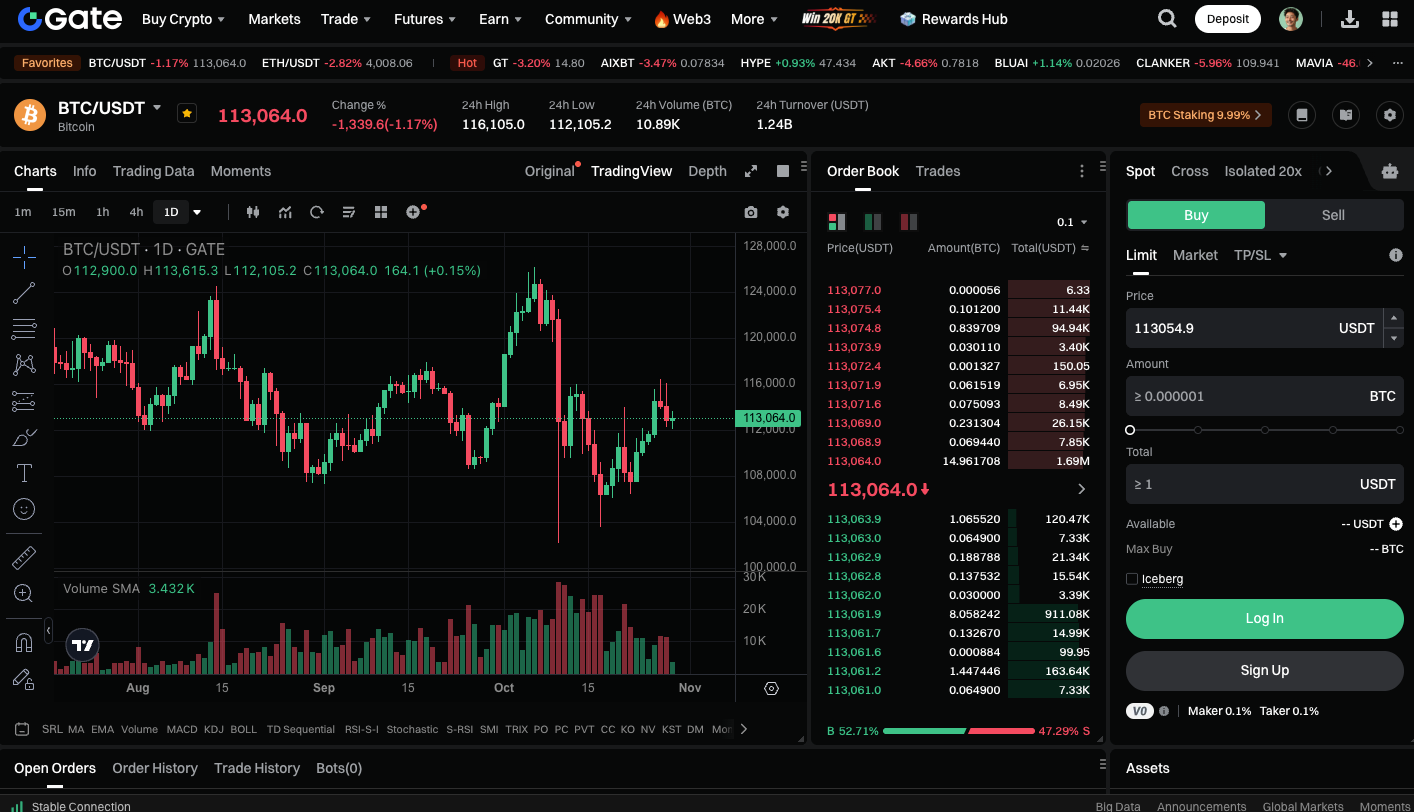
Start trading BTC spot now: https://www.gate.com/trade/BTC_USDT
Summary

With miner debt leverage rising and AI-driven energy infrastructure expanding, the market widely anticipates that Bitcoin prices could break through $120,000 and potentially reach $130,000. AI stands not only at the heart of the technological revolution but may also serve as the hidden catalyst for the next Bitcoin bull run.

Author: Allen
Disclaimer
* The information is not intended to be and does not constitute financial advice or any other recommendation of any sort offered or endorsed by Gate.
* This article may not be reproduced, transmitted or copied without referencing Gate. Contravention is an infringement of Copyright Act and may be subject to legal action.

Related Articles

What is Fartcoin? All You Need to Know About FARTCOIN
Intermediate

What is Fartcoin? All You Need to Know About FARTCOIN

Fartcoin (FARTCOIN) is a representative meme coin within the Solana ecosystem based on an AI-driven narrative. Its core concept originated from an experiment aimed at exploring the "boundaries between AI Agents and humor." More than just a digital asset with social attributes, the project deeply couples absurd humor culture with on-chain financial logic by integrating autonomous AI interaction models.
2026-04-04 22:01:19
Gold Price Forecast for the Next Five Years: 2026–2030 Trend Outlook and Investment Implications, Could It Reach $6,000?
Beginner

Gold Price Forecast for the Next Five Years: 2026–2030 Trend Outlook and Investment Implications, Could It Reach $6,000?

Analyze current gold price trends alongside authoritative five-year forecasts, integrating an evaluation of market risks and opportunities. This gives investors insight into the potential trajectory of gold prices and the main drivers expected to shape the market over the next five years.
2026-03-25 18:13:30
Aster vs Hyperliquid: Which Perp DEX Will Prevail?
Beginner

Aster vs Hyperliquid: Which Perp DEX Will Prevail?

Aster and Hyperliquid are the two representative protocols of the "purpose-built L1 path" within the current decentralized perpetual exchange (Perp DEX) sector. As a pioneer in the field, Hyperliquid has built a deep liquidity moat through its highly mature order book architecture and strong community consensus. Conversely, Aster, as a rising challenger, seeks to leapfrog the competition in high-performance trading through more aggressive multi-chain aggregation logic, private transaction modules, and an underlying execution environment optimized for 2026 market demands.
2026-03-24 11:58:33
AI-Native Settlement Layers: How United Stables Is Building the Next Financial Rail
Beginner

AI-Native Settlement Layers: How United Stables Is Building the Next Financial Rail

Stablecoins were originally designed as dollar substitutes within exchanges, primarily used for asset pricing and trade settlement. As on-chain financial ecosystems have matured, their role has expanded beyond simple payments to include collateral assets, cross-chain liquidity mediums, and unified settlement units. In particular, as AI systems and automated agents begin to participate directly in economic activity, demand has risen sharply for programmable value units capable of instant settlement. This shift is pushing stablecoins toward the role of foundational financial infrastructure.
2026-03-25 03:16:17
ASTER Tokenomics: Buybacks, Burns, and Staking as the Value Foundation of ASTER in 2026
Beginner

ASTER Tokenomics: Buybacks, Burns, and Staking as the Value Foundation of ASTER in 2026

ASTER is the native equity and governance token of the Aster ecosystem, with its core value built upon a radical "Deflationary Engine." Beyond serving as a governance tool, ASTER integrates multiple utilities including staking rewards, trading fee discounts, and liquidity incentives. Through its deep integration with the upcoming dedicated Layer 1 mainnet, it enables direct value capture from protocol cash flow to token holders.
2026-03-25 07:38:07
Hybrid Collateral Stablecoins: Inside United Stables' Stability and Yield Architecture
Beginner

Hybrid Collateral Stablecoins: Inside United Stables' Stability and Yield Architecture

In the early stages of the crypto market, traditional stablecoins mainly relied on single-reserve or single-collateral models. Their primary focus was price stability and payment convenience, which allowed them to become foundational tools for on-chain trading and capital flows. As the market has entered a more mature financial phase, however, this structure has begun to reveal limitations, including high concentration risk and the difficulty of balancing liquidity with yield. These constraints have driven the evolution toward multi-layer collateral and portfolio-based designs, such as the dual-layer hybrid collateral architecture proposed by United Stables, which seeks to redefine the underlying logic of stable assets.
2026-03-25 03:17:39